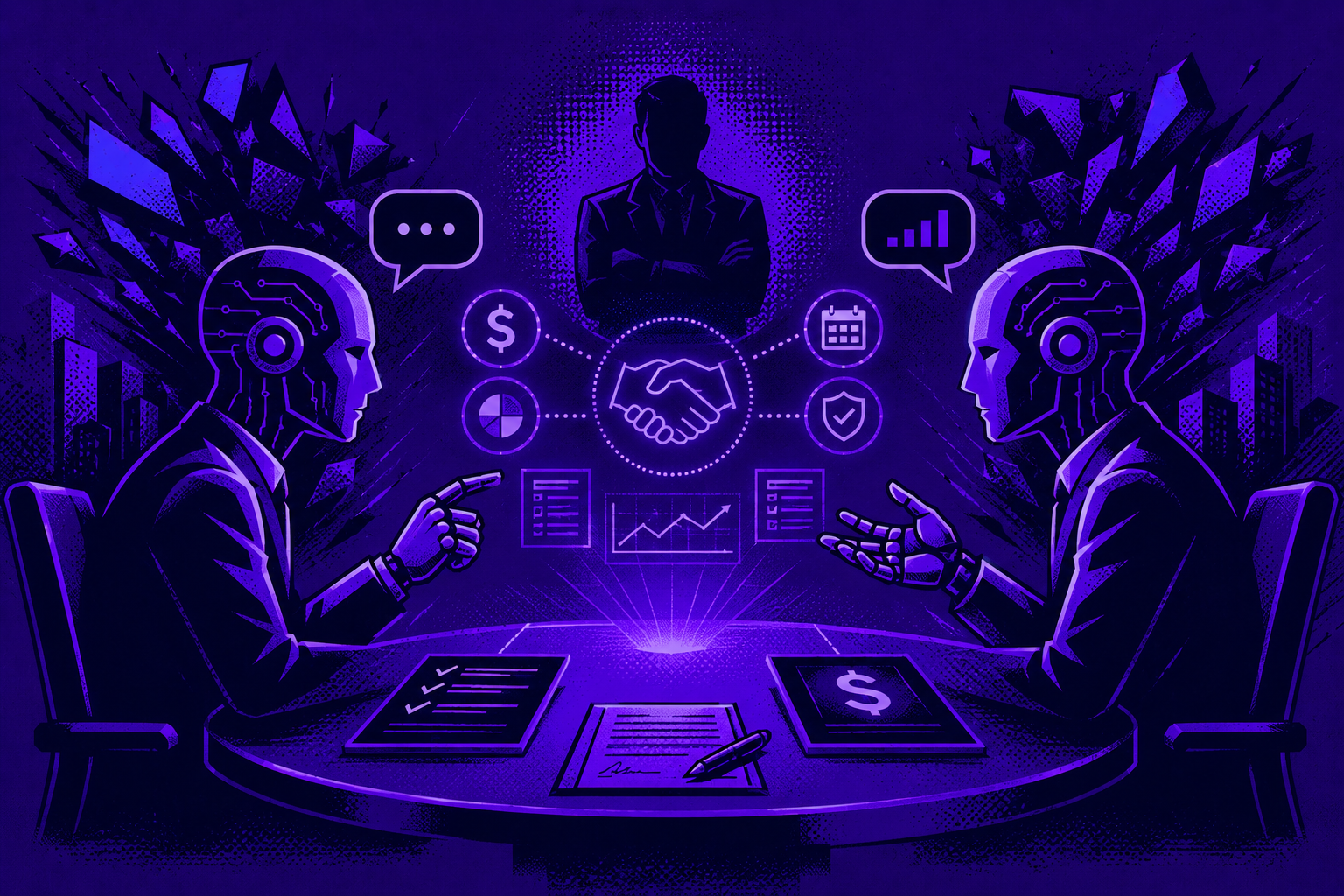
You are on a call with a customer service agent. The voice on the line is calm, patient, and seems to genuinely understand your frustration. It asks clarifying questions with just the right tone, offers reassurance at precisely the moment your irritation peaks, and resolves your issue with an efficiency that feels almost human. Only later do you learn: you were never speaking to a human.
This scenario is no longer science fiction. In 2026, the frontier of artificial intelligence has moved beyond logic and language into the domain once considered exclusively human: emotion. Affective computing, AI designed to detect, interpret, and respond to human emotion, is being deployed in sales calls, customer service centers, and even executive coaching sessions. The promise is profound: machines that can empathize, adapt, and build relationships.
But the question at the heart of this revolution is uncomfortable: Can a machine truly understand how we feel? Or is empathy, when algorithmically generated, merely a sophisticated illusion, a simulation that serves us but never connects with us?
Affective computing is the field of artificial intelligence dedicated to recognizing, interpreting, and responding to human emotions. It draws on multiple disciplines: computer vision (reading facial expressions), natural language processing (analyzing tone and word choice), physiological sensing (heart rate, skin conductance), and behavioral analysis (interaction patterns).
The technology has advanced rapidly. Modern affective AI systems can:
These capabilities are no longer confined to research labs. They are embedded in commercial platforms used by Fortune 500 companies to train sales teams, triage support calls, and even coach managers on empathetic leadership.
A sales representative on a discovery call has a limited set of cues: tone of voice, a few facial expressions, the rhythm of the conversation. An AI co-pilot, listening in real time, can analyze hundreds of vocal and linguistic markers simultaneously. It can detect when a prospect's enthusiasm flags, flag objections before they're explicitly stated, and suggest the precise moment to pivot to pricing or close.
Companies like Gong, Chorus, and newer entrants in the affective space now offer real-time sentiment analysis. The sales rep sees a dashboard: green for engaged, yellow for cautious, red for disengaged and receives suggested responses tailored to the detected emotion. Early adopters report 15–20% higher win rates on deals where AI sentiment coaching was used, according to 2025 data cited in the Salesforce State of Sales Report.
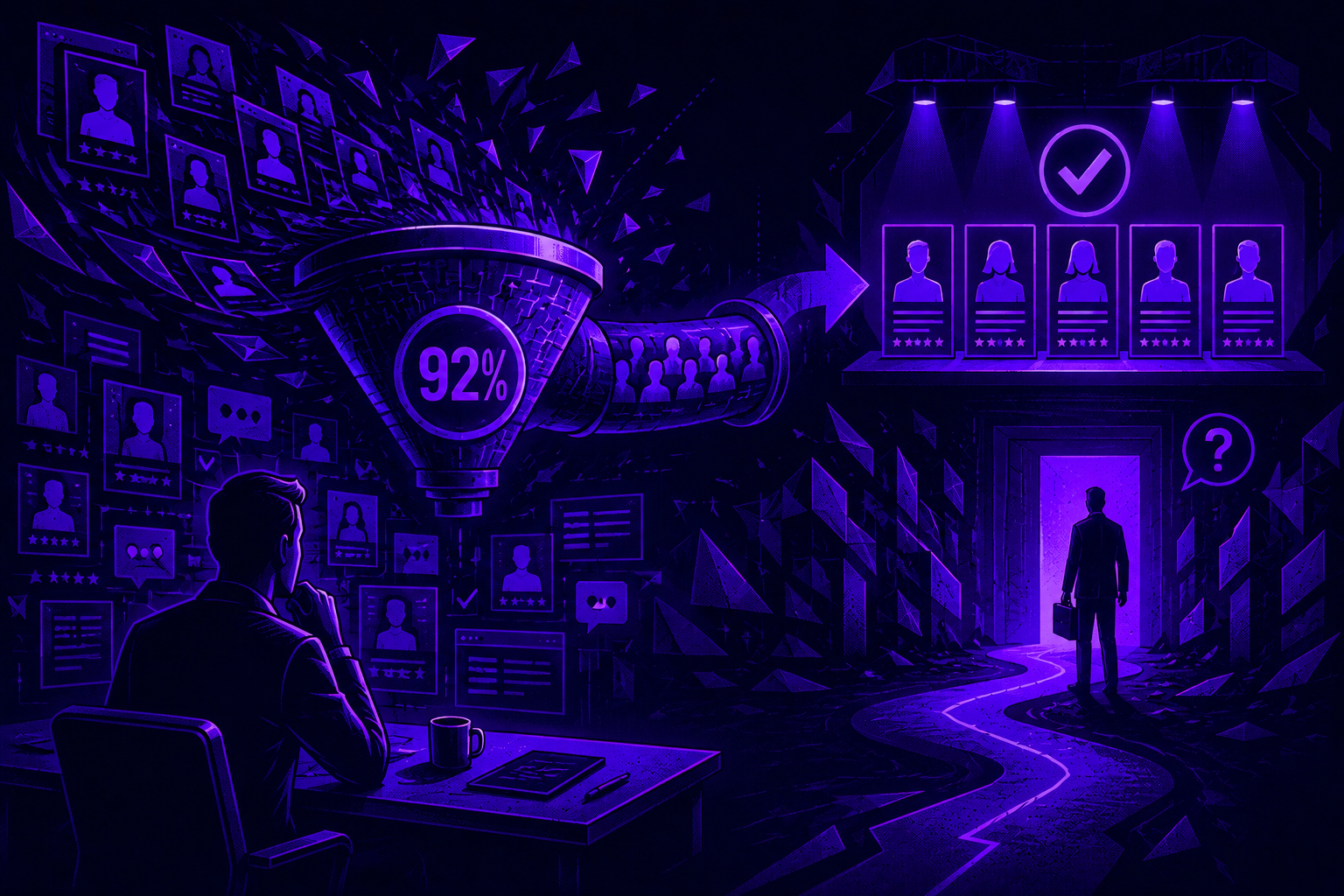
Customer service is often where emotions run hottest. Affective AI can triage calls by emotional urgency: a mildly confused customer routed to a self-service bot, a furious one immediately escalated to a human supervisor trained in de-escalation.
In the call itself, AI agents can detect rising frustration and automatically slow their speaking pace, soften their tone, and deploy empathy statements, "I understand how frustrating this must be" at precisely the moment they will have maximum effect. Some systems now use voice synthesis that adapts in real time, creating a voice persona that matches the customer's emotional state.
The results are measurable. A 2025 study from the Journal of Service Research found that AI-driven emotional adaptation reduced customer anger by 27% and increased first-call resolution by 19% compared to scripted, emotion-blind interactions.
Perhaps the most intriguing application is in leadership development. Executive coaches have long helped leaders refine their emotional intelligence, their ability to perceive, use, understand, and manage emotions. Affective AI is now being used as a training tool, providing real-time feedback during meetings and presentations.
A leader practicing a difficult conversation receives a post-meeting report: "Your tone was perceived as authoritative when you intended to be supportive. Three times you interrupted before the speaker finished. Your facial expressions conveyed frustration during the second half." This is not judgment; it is data. And it allows leaders to develop self-awareness in ways that were previously impossible without a dedicated coach in the room.
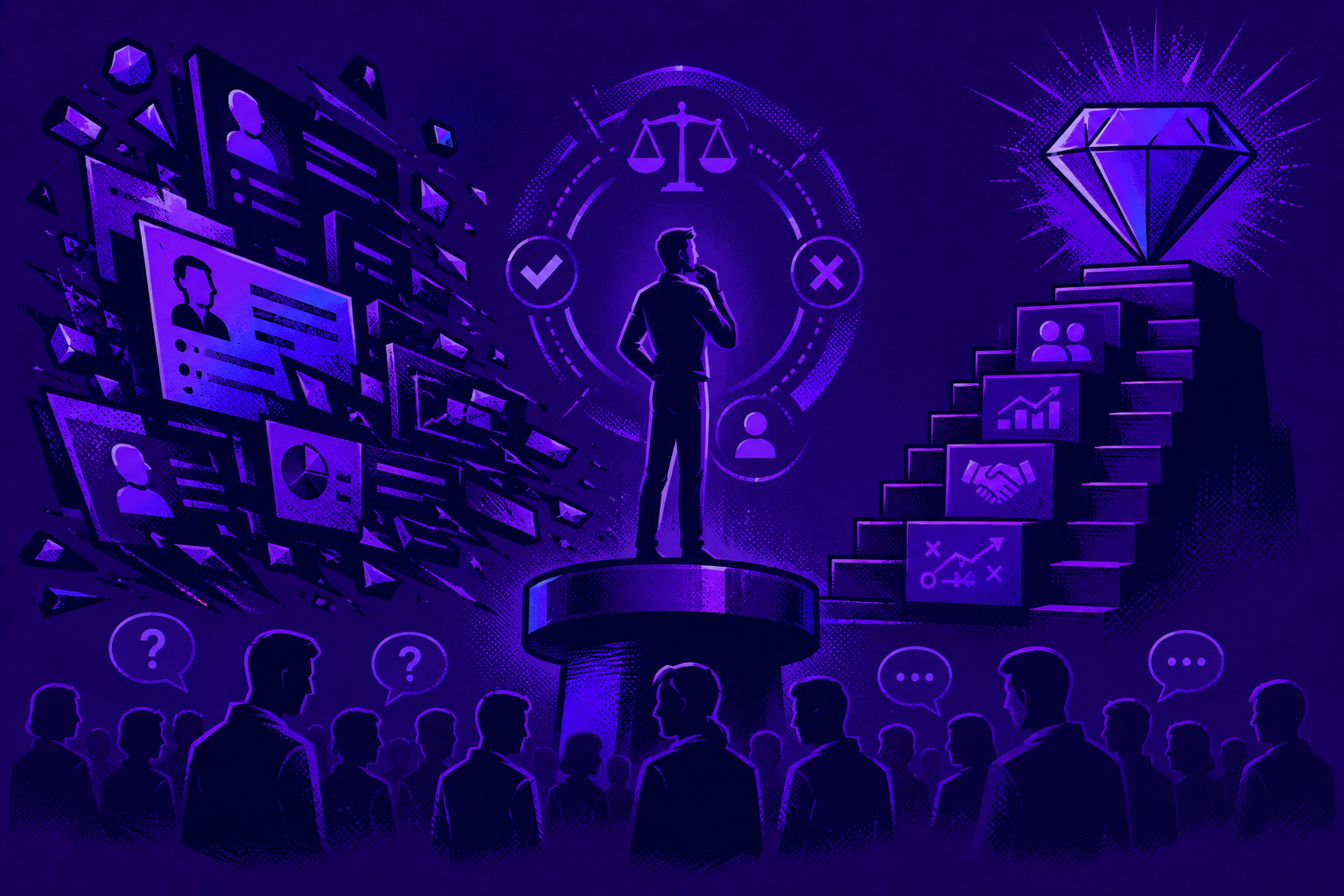
The applications are compelling. But they rest on a foundational question that the field is only beginning to answer: Does AI actually understand emotion, or is it simply recognizing patterns and responding with learned scripts?
The distinction matters. A human empathizes because they have felt frustration, fear, joy, and loss. They draw on a lifetime of embodied experience. An algorithm has no body, no biography, no inner life. It maps inputs to outputs. When it detects a furrowed brow and a rising pitch, it knows, from thousands of labeled examples, that this pattern often precedes anger. It deploys a soothing response because that pattern was associated with successful outcomes in training data.
This is pattern recognition, not feeling. And yet, for many purposes, the difference may be irrelevant. If an AI customer service agent can de-escalate a frustrated caller faster than a human can, does it matter whether the AI "understands" the frustration? If an AI coach helps a leader become more self-aware, does the absence of true consciousness diminish the result?
These are not merely philosophical questions. They have practical implications for trust, accountability, and the future of human-AI relationships.
If AI can detect vulnerability, it can exploit it. A sales AI that senses a prospect's insecurity could deploy urgency tactics. A political campaign could micro-target emotional triggers. The same technology that de-escalates anger could also amplify it when profitable. The line between empathy and manipulation is thin, and where profit incentives lie, the pressure to cross it will be immense.
When an AI expresses empathy, "I hear your frustration" the user may feel genuinely heard. But the care is simulated. If users come to believe they are interacting with a caring entity, what happens when they discover the truth? Betrayal, disillusionment, or a deepening cynicism about all institutional interactions?
Regulators are beginning to notice. The EU AI Act, which came into full force in 2026, classifies emotion recognition systems as "high risk," requiring transparency, human oversight, and strict limitations on use in sensitive contexts like employment and education. The California Privacy Rights Act now requires explicit consent for emotional profiling.
Emotion detection systems are trained on data that reflects cultural norms. A smile in one culture may indicate happiness; in another, it may signal embarrassment or deference. Facial recognition systems have been shown to misclassify emotions more often for Black and Asian faces than for white faces. If these systems are deployed in hiring or policing, the consequences are not just inaccurate, they are unjust.
Some researchers argue that the question itself is a category error. Empathy, they say, is not a property of a system but a property of a relationship. If a human feels understood, empathy has occurred, regardless of whether the understanding came from a human or a machine.
Others push further. They point to advances in embodied AI, robots with physical presence that learn through interaction, and long-term memory architectures that allow AI to build a history of a person's emotional patterns over years. Could a system that has witnessed a user's triumphs and struggles over a decade, that remembers their preferences and their pain, develop something functionally indistinguishable from empathy?
Philosopher Daniel Dennett once noted that the human ability to feel another's pain is itself a product of evolution, a biological algorithm refined over millennia. If an artificial system can simulate that algorithm with sufficient fidelity, at what point does the simulation become the thing itself?
These are open questions. What is not open is the trajectory: affective AI is here, it is improving, and it is being deployed in the most sensitive domains of human interaction.
The Empathy Algorithm presents a paradox. It can detect our emotions more accurately than we can ourselves, yet it can never feel them. It can respond with perfect therapeutic language, yet it has no inner life to draw upon. It can make us feel seen, yet it has no eyes of its own.
The organizations that deploy this technology will need wisdom, not just technical capability. They will need to ask not just "Can we?" but "Should we?" They will need to be transparent about what is human and what is machine. And they will need to ensure that the power to detect emotion is used to serve, not to manipulate.
For leaders, the lesson may be the oldest one: technology amplifies intention. If your intention is to understand and help, affective AI can be a powerful ally. If your intention is to exploit and control, it will be a dangerous weapon.
The machine can learn to mirror our emotions. Whether it can truly understand them remains an open question. But the more pressing question is whether we, as builders, buyers, and users of this technology, understand our own.
Is your organization ready to deploy emotion AI responsibly? Let's conduct an Affective AI Readiness Assessment to evaluate your use cases, ethical guardrails, and transparency strategy. Book a complimentary Strategy Session.