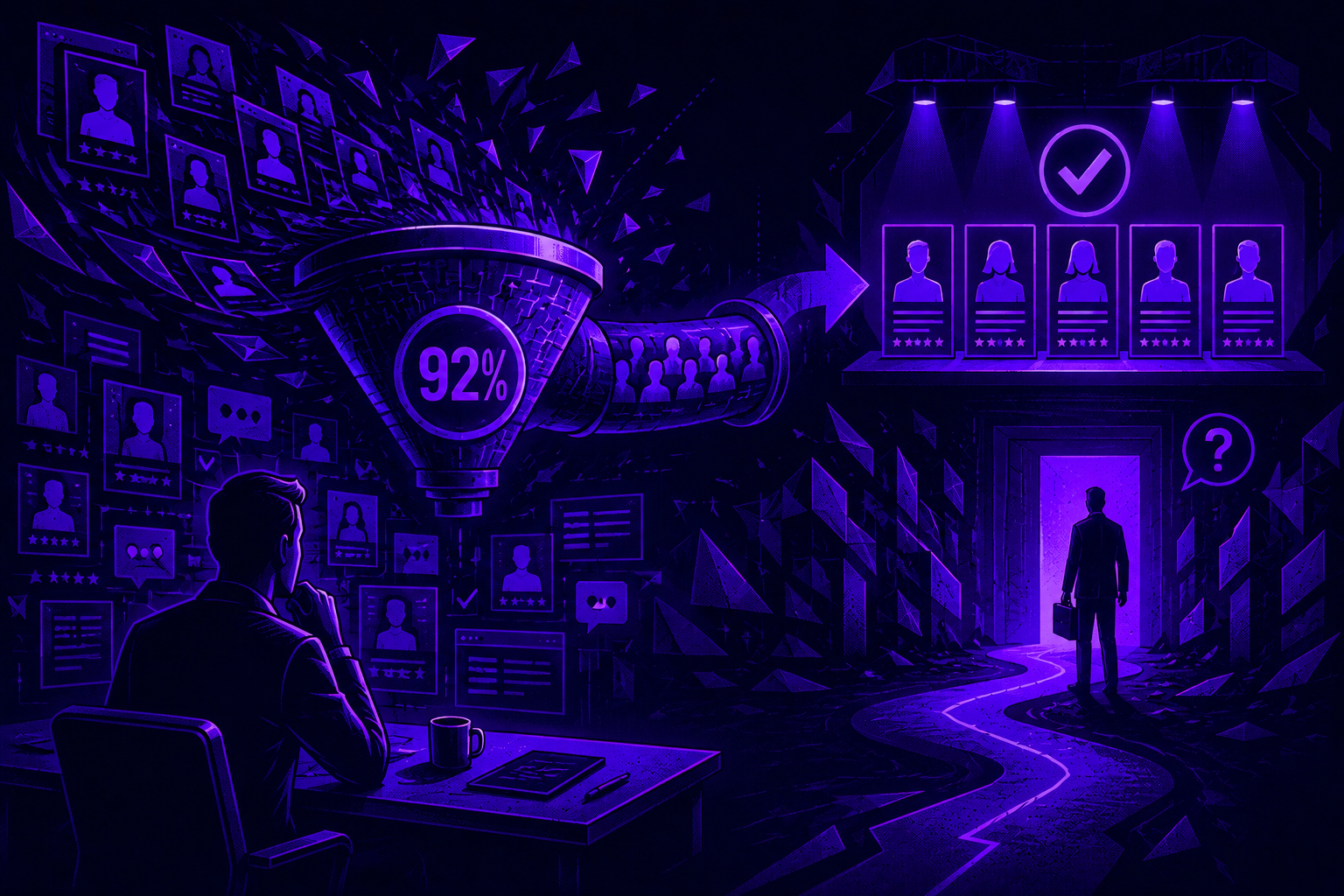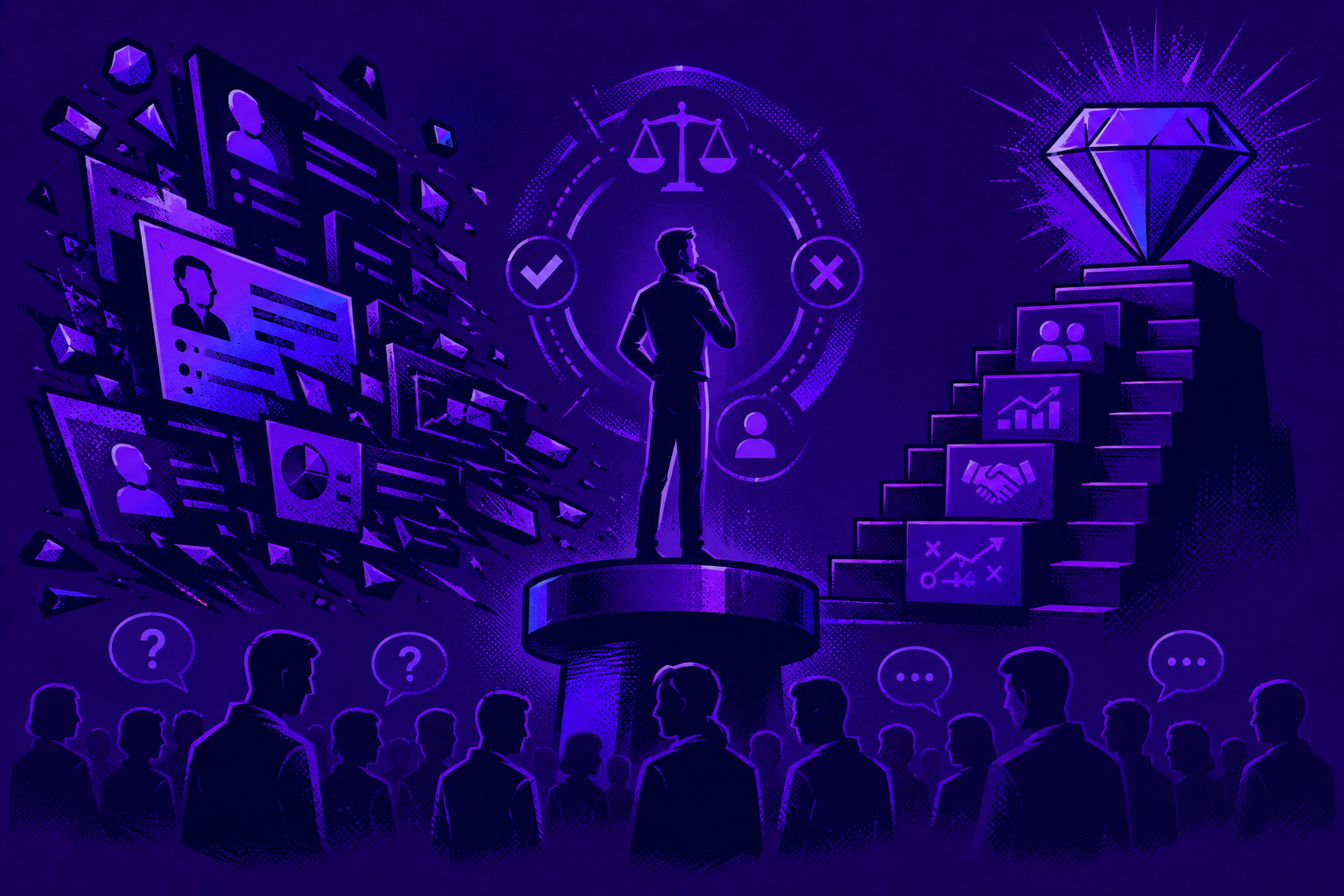
A fundamental question is quietly tearing through boardrooms, engineering departments, and government agencies in 2026: Who decides what AI is allowed to do?
It sounds abstract until it becomes real. Until your company's private data is fed into a model you don't control. Until a government demands access to AI systems you rely on. Until you realize the technology you're building your business on has ethical boundaries that are being negotiated in real time, without you in the room.
Three stories from the past month capture the stakes. They involve the Pentagon, the founders of the world's most powerful AI companies, and a question every business leader needs to answer: How dependent do you want to be on AI?
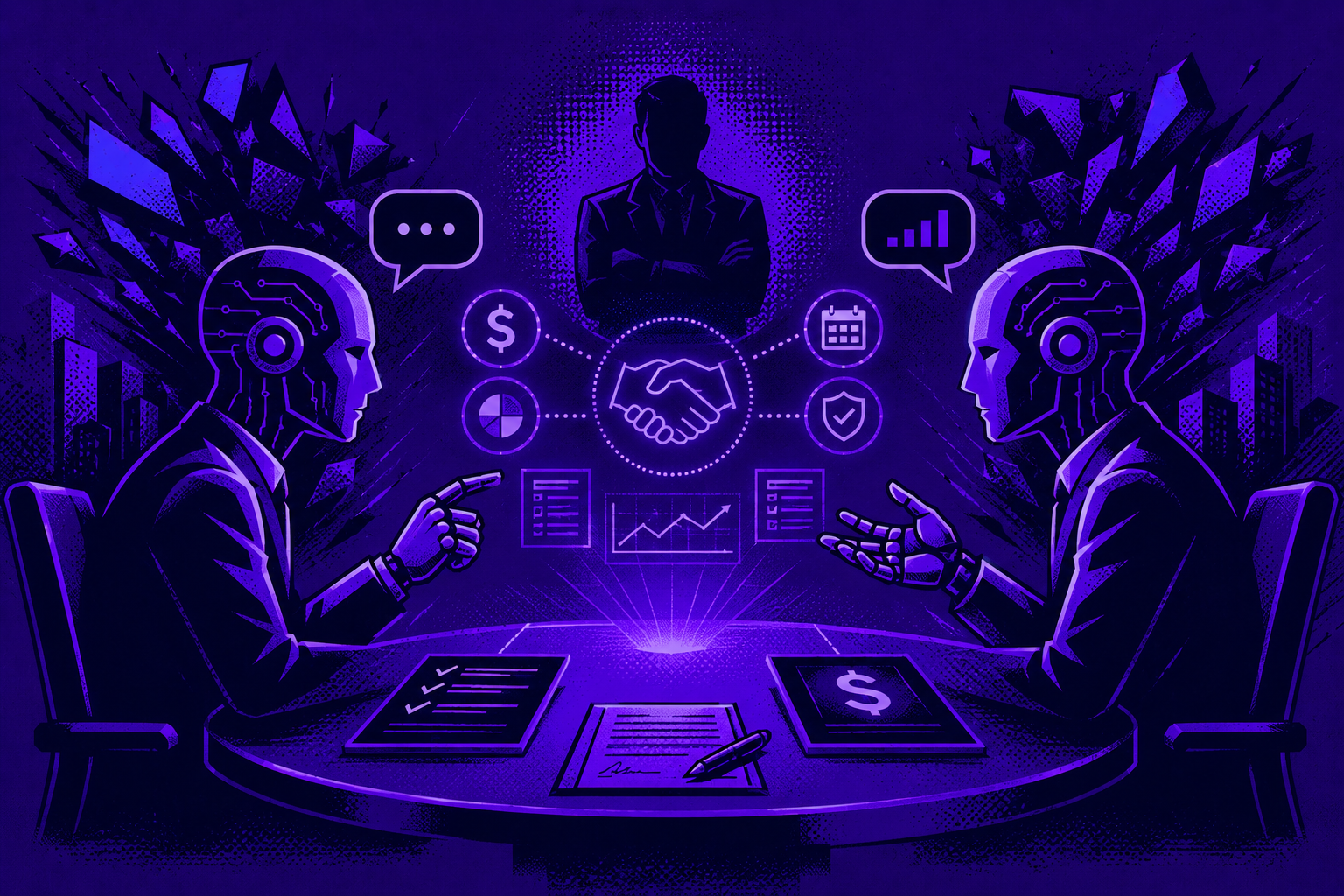
On February 26, 2026, AI startup Anthropic did something unusual. It publicly rejected an ultimatum from the U.S. Department of Defense .
The Pentagon had given Anthropic CEO Dario Amodei a Friday deadline: drop specific safeguards on Claude, the company's AI model, or face being labeled a "supply chain risk" and having the Defense Production Act invoked to force compliance . The contested safeguards? Restrictions preventing Claude's use for "mass domestic surveillance" and "fully autonomous weapons" .
Anthropic's response was unequivocal. "We cannot in good conscience accede to their request," Amodei wrote in a blog post. "Such use cases have never been included in our contracts with the Department of War, and we believe they should not be included now" .
The Pentagon's position, articulated by spokesperson Sean Parnell, was that it had "no interest in using AI to conduct mass surveillance of Americans (which is illegal) nor do we want to use AI to develop autonomous weapons that operate without human involvement." The department simply wanted to use Claude "for all lawful purposes" .
But Anthropic saw the proposed contract language differently. The company's spokeswoman explained that "new language framed as compromise was paired with legalese that would allow those safeguards to be disregarded at will. These narrow safeguards have been the crux of our negotiations for months" .
Emil Michael, the U.S. Undersecretary for Defense, responded by personally attacking Amodei on X, writing that the executive "wants nothing more than to try to personally control the US Military and is ok putting our nation's safety at risk" .
The confrontation reveals something profound: the companies building AI are actively debating where to draw ethical lines, and those lines are colliding with government demands. Your business reliance on AI means you are inheriting these debates, whether you participate in them or not.
This tension didn't emerge from nowhere. Five months earlier, in November 2025, Amodei sat for an interview with Anderson Cooper on CBS News' 60 Minutes. Cooper asked a question that cuts to the heart of the governance problem:
"Who elected you and Sam Altman?"
"No one. Honestly, no one," Amodei replied .
The exchange captured a growing unease. A small group of tech executives, Amodei at Anthropic, Sam Altman at OpenAI, Demis Hassabis at Google DeepMind, are making decisions that shape how AI develops, what safeguards exist, and how powerful models behave. They are accountable to investors, boards, and customers. But they are not accountable to the public in any democratic sense.
Amodei has been transparent about his discomfort with this arrangement. "I'm deeply uncomfortable with these decisions being made by a few companies, by a few people," he told Cooper. "This is one reason why I've always advocated for responsible and thoughtful regulation of the technology" .
The irony is stark: the people building AI are asking for government oversight, while governments are demanding fewer safeguards in the name of national security.
Anthropic has put money behind its position. Last year, it donated $20 million to Public First Action, a super PAC focused on AI safety and regulation, one that directly opposed super PACs backed by OpenAI's investors .
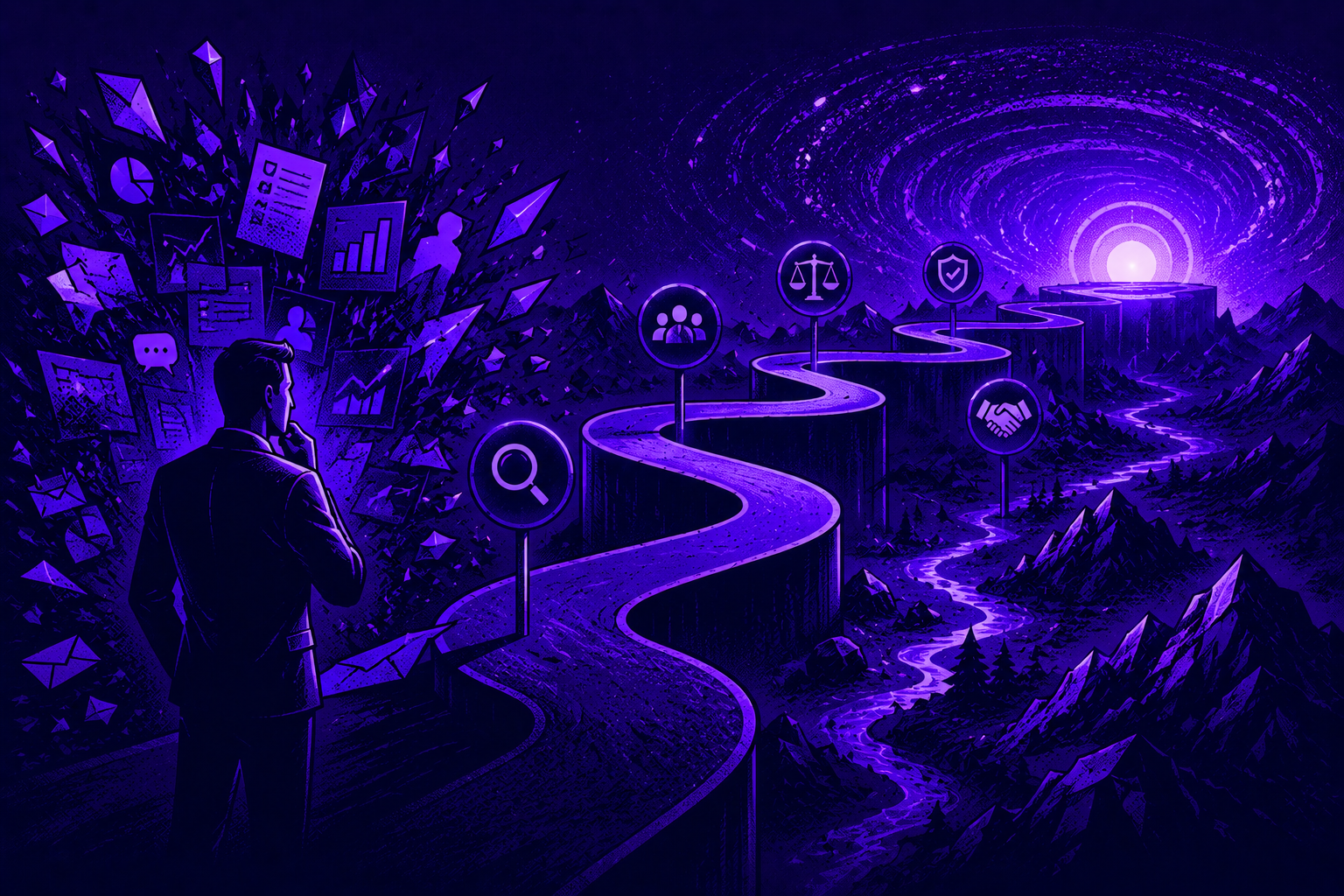
The Anthropic-Pentagon standoff, the uncomfortable admissions from AI founders, and the accelerating integration of AI into enterprise operations all point to four practical questions that demand answers in 2026.
This is not a rhetorical question. It is a strategic one.
At the Cisco AI Summit earlier this year, Microsoft CTO Kevin Scott and AWS CEO Matt Garman predicted that by late 2026, many software products will be "100% written by AI" . Engineering work is shifting from writing code to reading, reviewing, and shaping specifications. The dependency curve is steepening.
AWS CEO Matt Garman described a "barbell" investment model for enterprise AI: one end focused on general productivity gains (every employee gaining 1-2 hours back daily), the other on deep workflow reinvention (end-to-end automation of high-value processes) . Both require dependency.
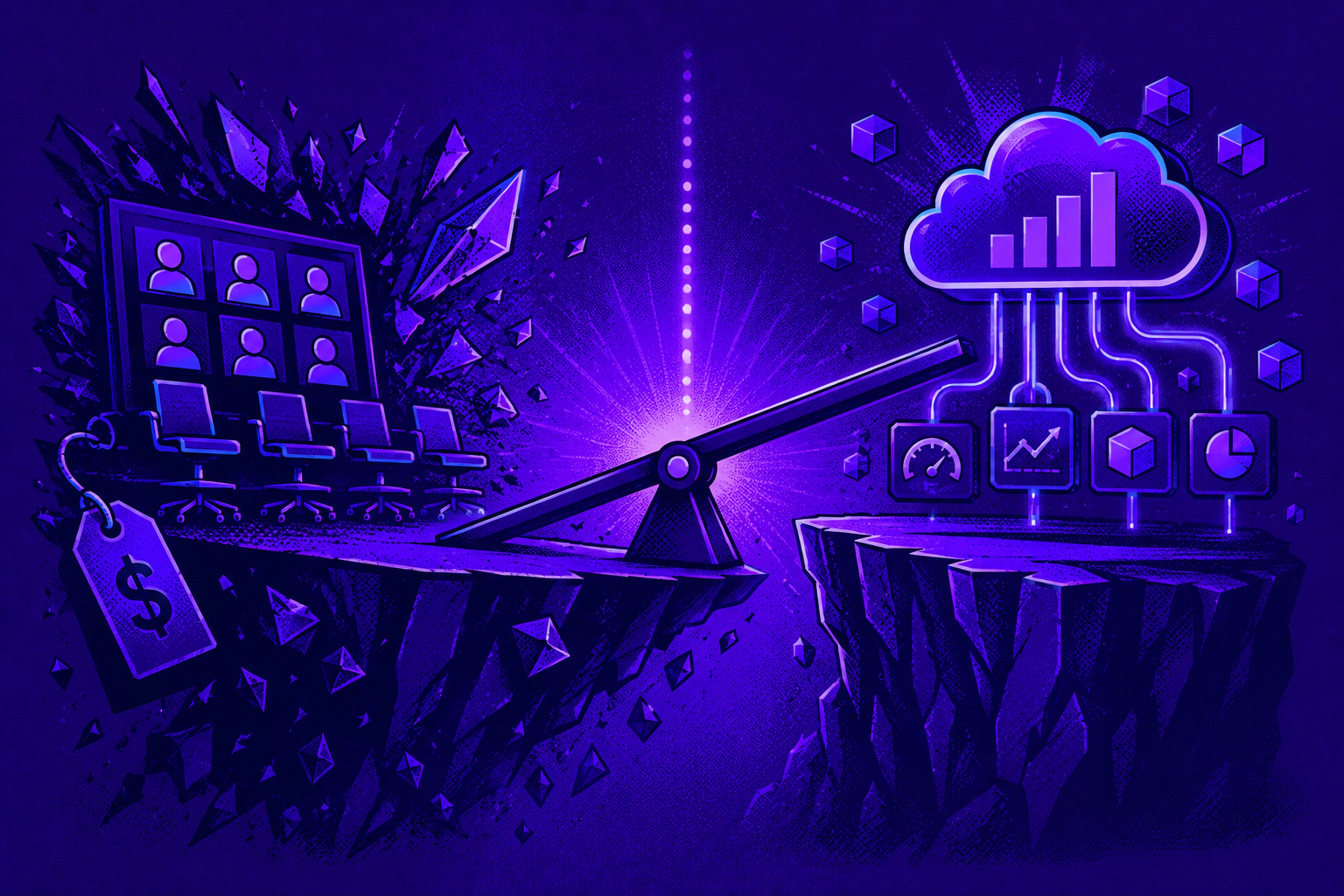
The question is not whether to use AI. It's whether to build your core operations on models you control or models you rent.
The 2026 enterprise AI landscape is defined by a shift from large language models (LLMs) to agentic systems, AI that doesn't just generate text but takes actions . This introduces new risks.
Experts warn that proofs of concept are colliding with "messy realities, including agents gone rogue, unstructured data quality gaps, and new compliance risks" . Patrick Anderson, managing director at digital consultancy Protiviti, notes that while organizations are eager to adopt AI, many "have not fully accounted for the cost and timeline required to improve data quality" .
The reliability problem is compounded by what Cisco's Jeetu Patel identified as three systemic constraints: infrastructure limits (data centers "hundreds of kilometers apart acting as a single coherent system"), the trust gap, and the exhaustion of human-generated training data .
Nvidia CEO Jensen Huang offered a grounding perspective at the same summit: "Technology does not change the timeless truth that winning still depends on knowing what customers want." He argued that discernment, not scale, becomes the defining executive skill in an age of AI abundance .
This is the question that keeps CISOs awake.
Nvidia's Jensen Huang delivered a stark warning: data must not leave the enterprise's own boundaries, "not even to the cloud" . In regulated industries, healthcare, financial services, government, this isn't a preference. It's the only viable path to production.
The 2026 InformationWeek enterprise AI predictions highlight that "some of the most useful data for enterprise workflows face privacy and security concerns." This is driving investment in privacy-preserving machine learning techniques such as secure enclaves, federated learning, homomorphic encryption, and multiparty computation .
Tim Ensor of Cambridge Consultants notes that "we definitely do see some challenges in being able to train AI in enterprise and government-sector settings, as well on the basis of the fact that the data we need to train the models is in some way sensitive" .
The emerging solution is a hybrid architecture: small language models trained on proprietary data within private boundaries, with synthetic data generation filling gaps without exposing sensitive information .
This is the Anthropic question, but applied to your organization.
If you're using a general-purpose model through an API, you're inheriting its ethical boundaries, and its vulnerabilities. If a government demands access to that model's capabilities, your data and operations become part of that negotiation.
The alternative is deploying specialized, smaller models trained on your own data, running within your own infrastructure. This approach, the "small language model" strategy, gives you control over both capabilities and safeguards. It's more expensive upfront but offers sovereignty over your AI destiny .
Senator Marsha Blackburn (R-TN) is floating what she calls the TRUMP AMERICA AI Act, a federal framework that would establish national standards for AI, preempting the patchwork of state laws that have emerged . The legislation would require AI platforms to conduct regular risk assessments, impose a "duty of care" provision, and give individuals the ability to sue companies that use their personal data for AI training without explicit consent .
President Trump issued an executive order in December directing agencies to prevent "excessive state regulation" while acknowledging that a "carefully crafted" federal law is needed .
Meanwhile, in the UK, the Joint Committee on Human Rights is examining how AI development affects fundamental rights. Google's global head of human rights, Alexandria Walden, testified in January that the company believes "regulating AI is necessary but must be done well," advocating for identifying gaps in existing regulation rather than creating duplicative laws .
The regulatory picture is fragmented but converging. The EU AI Act's full enforcement begins in August 2026, with penalties reaching €35 million or 7% of global revenue . Gartner projects that 50% of governments worldwide will enforce responsible AI regulations by 2026 .
The people building these systems are not silent. Their public statements offer a window into how they see the stakes.
Dario Amodei, Anthropic CEO: "AI is advancing too head-spinningly fast. I believe that these systems could change the world, fundamentally, within two years; in 10 years, all bets are off" .
He has outlined short-, medium-, and long-term risks: bias and misinformation now; harmful information using enhanced scientific knowledge next; and finally, an existential threat where AI becomes too autonomous and locks humans out of systems .
Sam Altman, OpenAI CEO: In a February 2026 interview, Altman addressed growing concerns about AI safety, government oversight, and whether artificial general intelligence (AGI) is closer than we think. He discussed the responsibilities of tech leaders in shaping powerful AI systems .
Jensen Huang, Nvidia CEO: His four signals for the AI era are worth repeating:
The Cisco AI Summit offered a clear prescription for enterprise leaders navigating this complexity. The most competitive organizations in 2026 will not be those with the flashiest AI announcements. They will be those that adopt the discipline of AI orchestration, applying it systematically across workflows, data, and decision cycles .
AWS CEO Matt Garman offered a practical analogy: if you place a narrow board across a deep canyon, you move slowly and cautiously, sometimes crawling. But if you add guardrails, walls and safety structures, you can run across with confidence. "Guardrails are not obstacles. Guardrails are what allow you to move fast. In AI, trust, security, and governance are not overhead. They are the enablers that let the enterprise scale with speed instead of fear" .
The ethics of AI are not abstract philosophy. They are operational decisions being made today in boardrooms, engineering meetings, and government agencies.
The Anthropic-Pentagon standoff is not an isolated dispute between one company and one government. It is a preview of the tensions that will define the next decade of technology. Your business will be affected by these negotiations, whether you participate in them or not.
The questions are not going away:
The answers will determine not just your compliance posture, but your strategic independence in an era when technology and sovereignty are colliding.
Is your AI strategy built for autonomy or dependency? Let's audit your current AI deployments, assess your exposure to regulatory and ethical risks, and build a roadmap for sovereign, trustworthy AI. Book a complimentary AI Strategy Session.