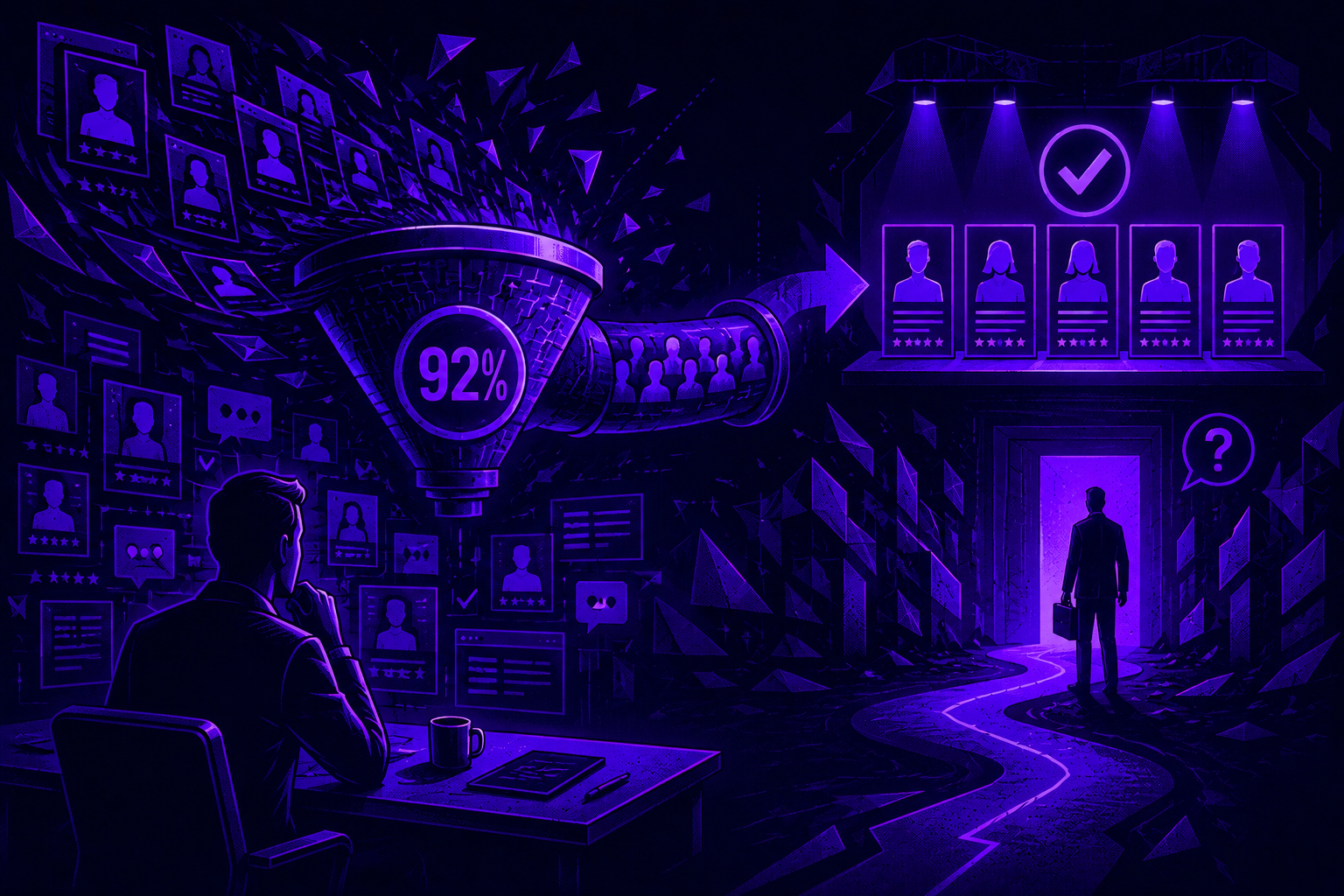
B2B buyers take an average of 272 days from first contact to closing a deal, according to data from B2B marketing attribution platform Dreamdata, with the vast majority of that journey taking place before a sales conversation ever begins. The conventional sales cycle of roughly 78 days? That only captures the period after a prospect has engaged with a salespersonjust 19% of the total buying journey. The remaining 81% happens before any sales contact at all, during a period when marketing teams are responsible for building brand familiarity and providing prospective buyers with material to research independently.
Your funnel is not too slow. Your measurement is too narrow.
The figures, drawn from a dataset of roughly 300 paying customers and more than 1,000 free-tier users in Dreamdata's 2026 LinkedIn Ads B2B Benchmarks report, span companies ranging from those selling to SMEs to those closing six- and seven-figure enterprise deals. Trends were tracked via 66 million sessions across over 3.5 million customer journeys.
The headline figures are striking:
Just one year ago, Dreamdata had the pre-sales portion of the journey pegged at 70%. Today, it's 81%. The buying process has grown structurally longer year over year.
Nick Turner, chief executive of Dreamdata, argues that the conventional marketing funnel, which assumes prospects move sequentially through defined stages from awareness to action, no longer reflects how B2B purchasing decisions are actually made.
"It's not that the funnel has lost support, but that the definition of the funnel has changed," said Turner. "You can't think of the typical buying journey as being incredibly linear, because it's not".
A typical buying decision now involves between 10 and 12 individual stakeholders, each of whom may be at a different point in their own evaluation at any given time. This complexity creates friction when sales teams attempt to move prospects into conversations before they are ready.
Dreamdata's most striking finding isn't the 272-day journey, it's that marketing owns 81% of it. Buyers spend roughly 220 days forming decisions before they ever enter a sales pipeline.
"Today, a deal is often won or lost before you know it's begun," the company stated in its report. "For over seven months, marketing is responsible for turning cold prospects into warm, sales-ready deals. Much of the research, education, and internal alignment now appears to happen before a lead becomes a Marketing Qualified Lead".
The 272-day buying cycle has profound implications for how organizations structure their go-to-market motion.
The Attribution Blind Spot. If marketing owns 81% of the journey but most attribution models only measure the final 19%, you are flying blind on what actually drives revenue. Marketing leaders who approach measurement as a confirmation exercise rather than a genuine test risk making decisions based on incomplete data.
The Content Strategy Reset. A 272-day journey with 88 touchpoints across four channels demands content that serves different stakeholders at different stages. The same asset cannot work for a finance stakeholder in month two and a technical buyer in month seven.
The Sales Alignment Reality. Sales teams attempting to compress a 272-day journey into a 30-day pipeline are not accelerating decisionsthey are creating friction. The data shows that pursuing volume over accuracy in lead scoring risks alienating buyers rather than converting them.
The obsession with "sales cycle compression" misses the point. Buyers are not stalling. They are doing their homework. The winning strategy is not to rush them, but to show up earlier and more helpfully in the research phase, before they have even formed a shortlist.
Is your marketing measurement capturing the full 272-day journey? Let's conduct an Attribution Gap Analysis to identify where your measurement ends and where influence is being lost. Book a complimentary Strategy Session.