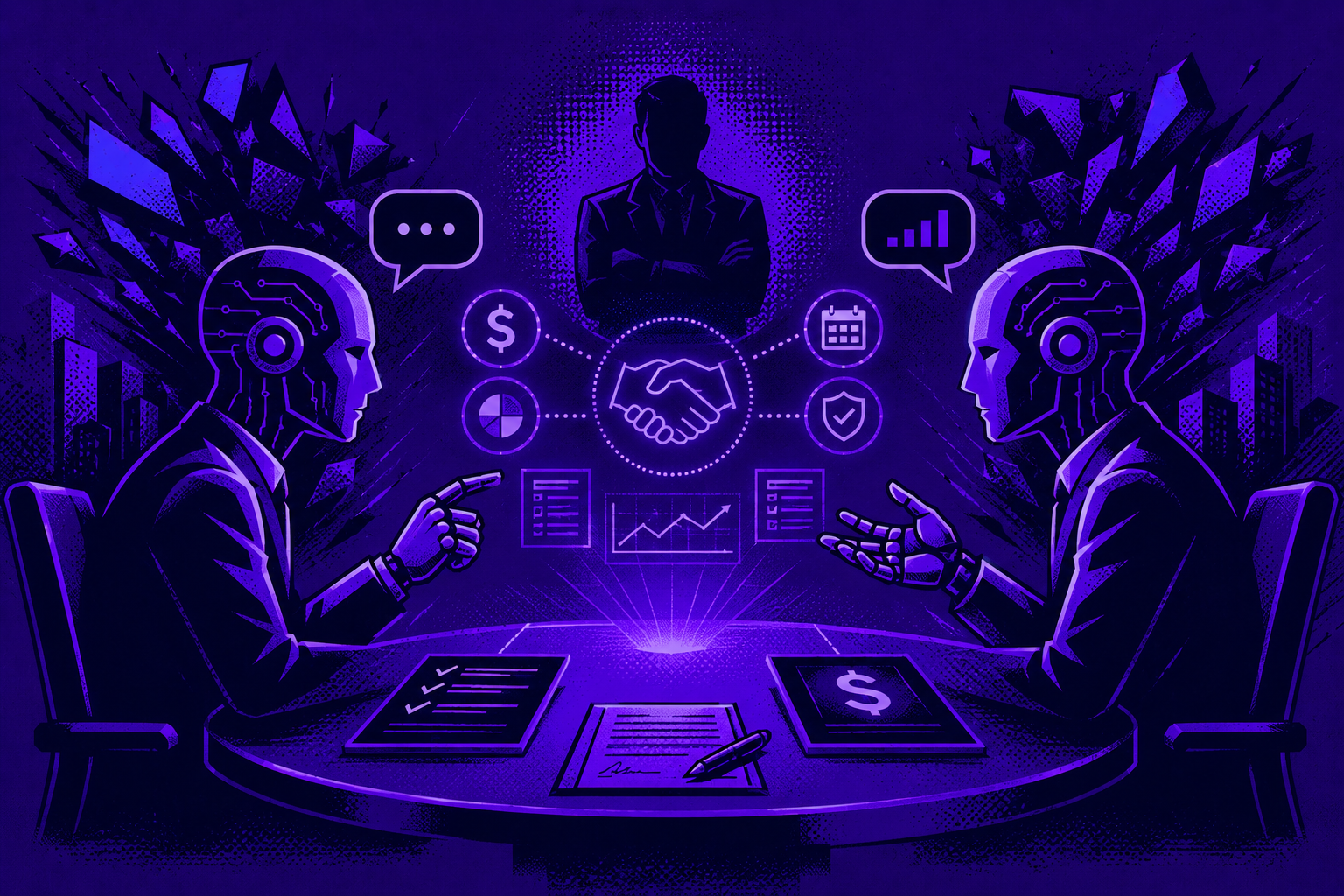
The next time you haggle over a software renewal, a supplier contract or a bulk discount, the person on the other side may not be a person at all. It will be an AI agent. And it will be negotiating with your AI agent.
This is not a distant forecast. It is the emerging reality of B2B commerce. Procurement teams are deploying autonomous negotiators that slash deal cycles from days to minutes. Sales teams are countering with their own agentic tools that analyze buyer behaviour and generate real‑time counteroffers. The infrastructure - open protocols, cloud marketplaces, agent‑friendly pricing models, has reached critical mass in 2026.
For revenue and finance leaders, the consequence is unavoidable: the next major negotiation will be mediated by machines. Who programs your agent, what data it can access, and how you govern its autonomy will determine whether you win or lose at the bargaining table.
Agent‑led buying and selling are already moving from pilots to production. Gartner predicts that 40% of enterprise applications will contain task‑specific AI agents by the end of 2026, up from less than 5% in 2025. Forrester projects that by the end of the year, one‑third of B2B payment workflows will leverage AI agents, and one in five sellers will be compelled to respond to AI‑powered buyer agents with dynamically delivered counteroffers via seller‑controlled agents.
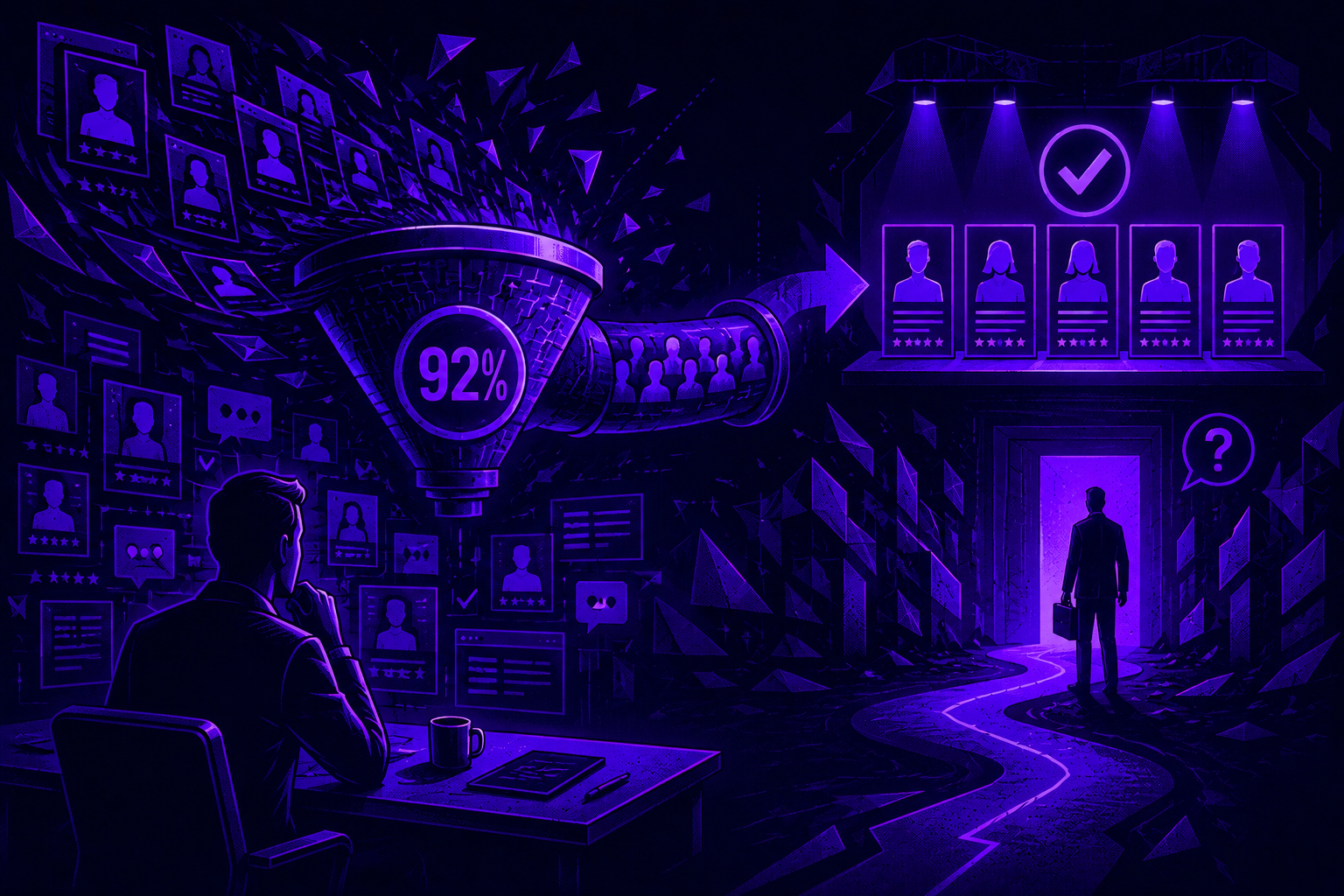
On the procurement side, the numbers are stark. Japanese tech firm NEC has already reduced the time needed to complete a procurement negotiation from between three and 48 hours to under one minute by deploying machine buyers. AstraZeneca cut requisition checks from roughly two days to under 90 seconds using Pactum AI’s alignment agent inside its existing procurement system. Xylem uses the same technology to scale supplier negotiations, achieving an estimated ROI in roughly 10 weeks.
The vendor ecosystem is coalescing rapidly. Salesforce’s Agentforce platform prices agents on a per‑action or per‑conversation metric, with 2026 list rates starting at $2 per conversation. Microsoft has released autonomous agents in Dynamics 365, including a supplier communications agent that tracks supplier performance, detects delays and responds autonomously. Marketplaces such as AWS, Google Cloud and Salesforce are evolving into the central nervous system for agent‑to‑agent transactions, with new standards such as the Model Context Protocol (MCP) and Agent‑to‑Agent (A2A) frameworks enabling agents to understand intent, share context and negotiate terms without human intervention.
The agentic negotiation workflow can be broken into three stages.
Discovery and shortlisting. A procurement agent is given a brief: “Find three suppliers for X service within Y budget and Z timeline.” The agent scans cloud marketplaces, analyses product descriptions, checks compliance documentation and shortlists candidates. It may also run a preliminary price‑to‑value comparison.
Structured negotiation. Both buyer and seller agents enter a pre‑defined negotiation protocol. Parameters can include price, volume tiers, payment terms, service‑level agreements and renewal caps. The agents can run thousands of parallel conversations simultaneously, optimising for the buyer’s cost target while respecting the seller’s margin floor.
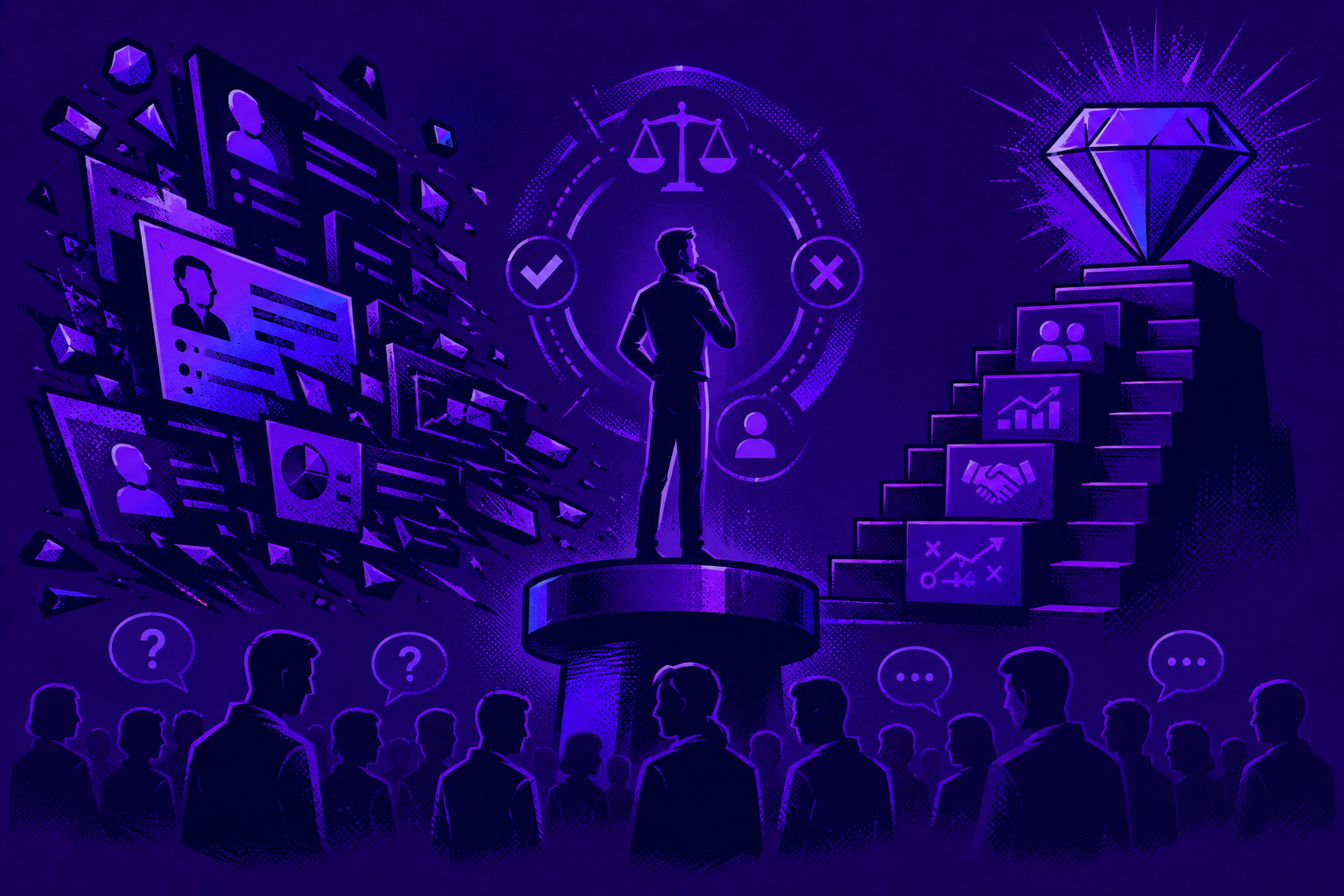
Human handover. If an agreement falls outside a guardrail, for example, a discount that would breach a minimum price, or a term that requires legal approval - the agent escalates to a human. This is the human‑on‑the‑loop model: agents execute, humans govern.
Suppliers often prefer negotiating with AI agents because the process is more consistent, transparent and efficient. Instead of navigating different negotiation styles, timing or pressure from human buyers, they engage in a structured, data‑driven process with clear parameters and immediate responses.
Agentic negotiation is not a technology project. It is an operating model redesign. Here is a practical roadmap for RevOps and procurement leaders.
1. Audit your vendor contracts for agent‑readiness. Does your pricing model expose machine‑readable data? Are your tiered discounts, volume caps and overage rates structured in a way that an agent can parse? If your commercial terms are buried in free‑text attachments, your agent will negotiate at a disadvantage.
2. Build a pricing data model. Agents consume structured information. Create a canonical price list that includes base rates, volume bands, term discounts and exclusions. Make it available via API or in a format that agentic marketplaces can consume. The discipline of “agentic SEO” - optimising product data for machine‑driven inference engines rather than human eyeballs - is becoming a competitive necessity.
3. Define your negotiation guardrails. What decisions can your agent make autonomously, and what requires a human? Set clear rules: approve any discount up to 10%, approve any term up to 12 months, escalate any request for custom legal clauses. Without guardrails, your agent may optimise for a metric that harms strategic value - for example, lowering price at the expense of payment terms.
4. Pilot with low‑risk, high‑volume negotiations. Start with tail spend or standard renewals. Learn how your agent interacts with supplier agents in live environments before moving to strategic negotiations. Use the pilot to surface organisational readiness gaps, data quality, integration stability, employee resistance, before scaling.
5. Train your teams for agent oversight. The role of procurement managers and sales leaders is shifting from executing orders to orchestrating strategies and providing governance over agent teams. Equip your people to interpret agent logs, understand negotiation patterns and intervene only when necessary. The skill of “prompt engineering” for negotiation strategies is becoming as critical as traditional category expertise.
Agentic negotiation does not eliminate human judgment. It elevates it.
The highest level of autonomy, as defined by Gartner, consists of interoperable AI agents that autonomously execute strategies and negotiate with suppliers while integrating across finance, legal and business units. But autonomy is not abdication. Human teams remain accountable for defining the objective function, setting guardrails, reviewing exception cases and tuning the agent’s behaviour over time.
CIOs should treat agentic AI pilots as business transformation exercises, not technology proofs‑of‑concept. The priority is to uncover workflow impediments and organisational flaws that impede agents at scale, not merely to deploy the technology. Formal mechanisms to codify the tacit, contextual knowledge that humans use for decision‑making become essential as agent autonomy increases.
You have a choice. You can wait for agentic negotiation to become standard and then play catch‑up, accepting the terms that your competitors’ agents have already shaped. Or you can act now, building the data models, guardrails and governance structures that allow your own agents to negotiate from a position of strength.
The infrastructure is here. The early adopters have posted their results. The question is no longer whether agentic negotiation will affect your business, but whether you will be leading the dance or being led by someone else’s algorithm.
Is your revenue organisation ready for agent‑to‑agent negotiation? Let’s audit your pricing data, define your guardrails and build the governance model that keeps you in control. Book a complimentary Strategy Session.