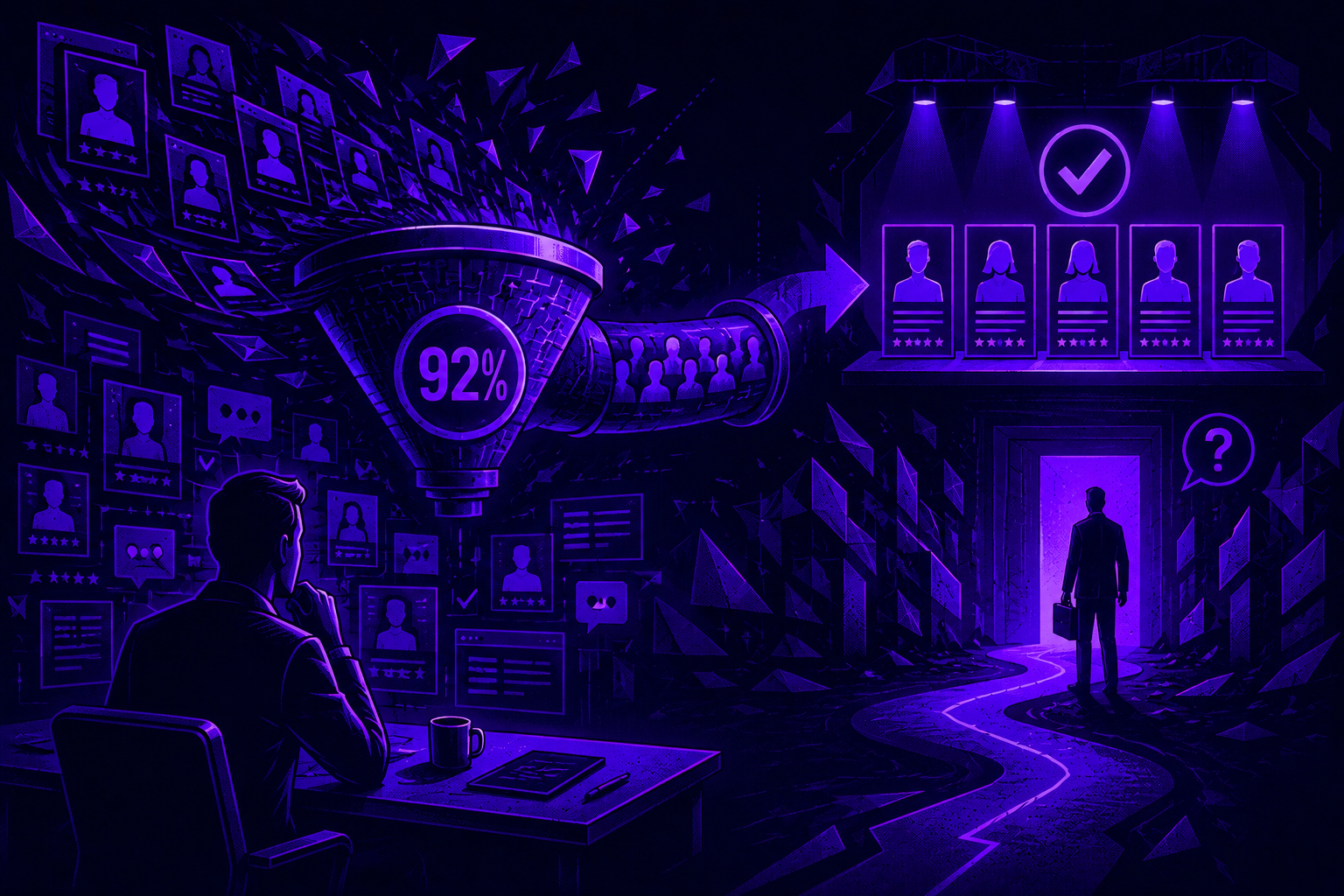
AI can generate content, analyze data, and even write code. It can draft emails, summarize meetings, and forecast revenue with increasing accuracy. It can do all of this faster, cheaper, and at a scale no human team could match.
Yet something is missing. The outputs are technically competent but strategically hollow. The recommendations are statistically sound but contextually blind. The speed is breathtaking, but the direction is often wrong.
This is the paradox of the AI era. The very technology that augments our analytical capacity is exposing the limits of pure computation. The scarce resource in 2026 is not data, not speed, not even AI capabilities. It is good judgment - the ability to set context, weigh tradeoffs, recognize when the market is drifting, and make decisions that no algorithm would predict.
Welcome to the Judgment Economy.
For decades, competitive advantage was built on access to information and analytical skill. The company with the best data, the sharpest analysts, and the most sophisticated models won.
That era is over.
AI has commoditized knowledge. Any organization can now generate competent market analysis, draft reasonable strategy documents, and produce data-backed recommendations with minimal human effort. The barrier to "good enough" has collapsed.
The consequence is profound: being right is no longer enough. When everyone has access to the same analytical tools, correctness becomes table stakes. The differentiator is not what you know, but how you choose to act on what you know - and what you choose to ignore.
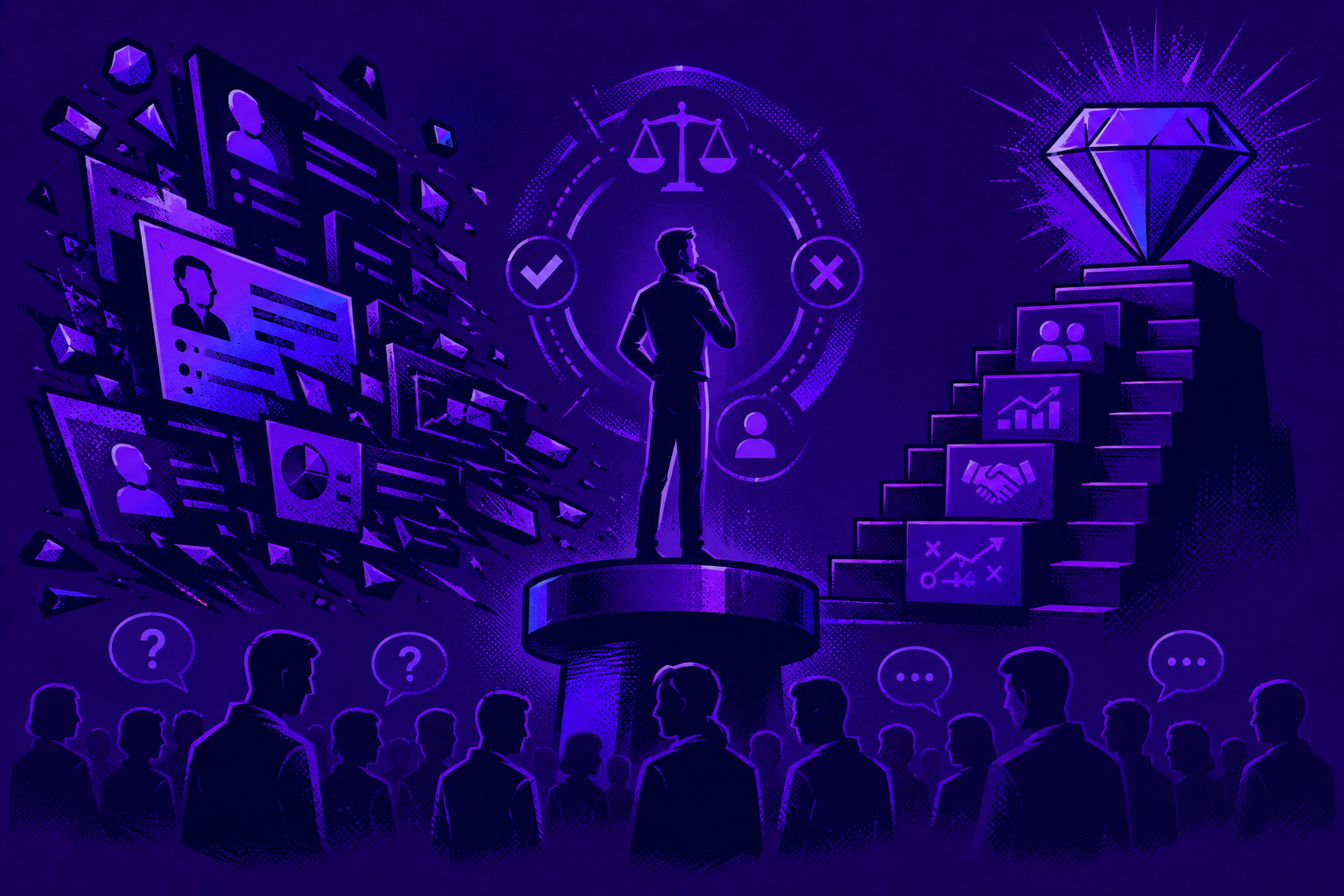
Analysis is the process of breaking down information to understand it. Judgment is the process of synthesizing incomplete information to decide what to do.
Analysis asks: "What does the data say?"
Judgment asks: "What does the data not say? What context is missing? What tradeoff are we willing to make?"
Analysis can be automated. Judgment cannot. Because judgment requires:
1. Context-setting. Numbers do not interpret themselves. A revenue forecast of $10M is neither good nor bad until you understand the market conditions, the competitive landscape, the team's capacity, and the strategic priorities. AI can provide the number. Only a human can set the frame.
2. Tradeoff recognition. Every decision involves tradeoffs. Investing in one initiative means defunding another. Prioritizing short-term revenue may sacrifice long-term positioning. AI can model outcomes. Only a human can weigh values.
3. Drift detection. The market shifts. Customer needs evolve. Competitive threats emerge. AI can flag anomalies. Only a human can recognize which anomalies are noise and which are signals of structural change.
4. Accountability. When a decision fails, someone must own it. AI cannot be accountable. It has no reputation, no career, no personal investment in outcomes. Judgment without accountability is just opinion.
The market is already rewarding judgment over analysis.
According to the 2026 Gartner CEO Survey, the top concern of CEOs is no longer technology adoption or data quality. It is decision effectiveness - the ability to make and execute high-quality decisions quickly. 67% of CEOs report that their organizations are slower to decide than they were three years ago, despite having vastly more data and analytical tools.
A 2026 study from MIT Sloan Management Review compared organizations with high analytical maturity against those with high decision-making effectiveness. The finding: analytical maturity alone had no correlation with performance. Decision effectiveness - defined as speed, quality, and execution - was the only consistent predictor of outperformance. The researchers concluded that "analytical sophistication without judgment is just expensive hesitation."
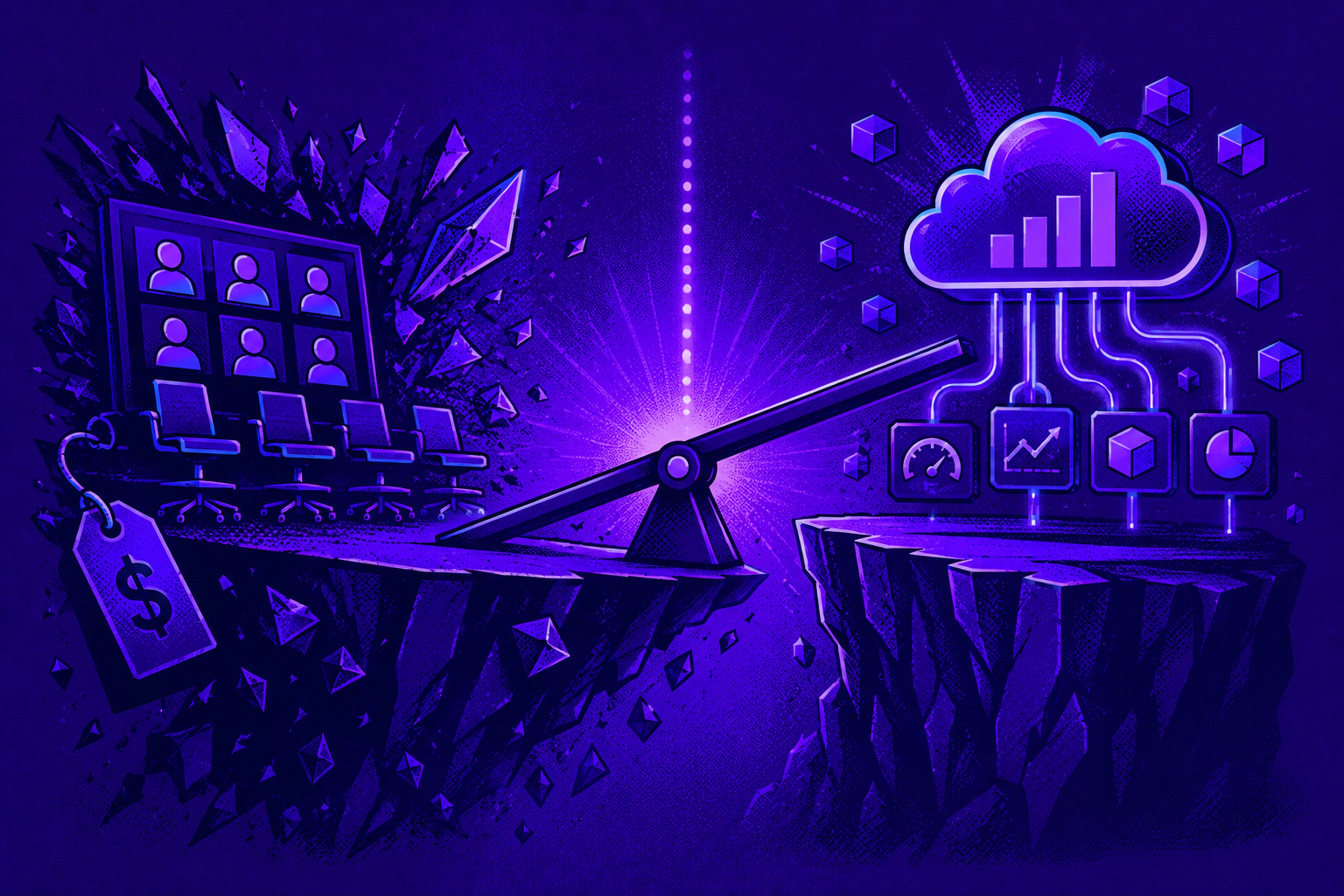
PitchBook's 2026 SaaS analysis similarly notes that "platforms that enhance or operationalize human judgment could command stronger pricing power and stickier relationships" than those that simply automate execution. The market is willing to pay a premium for tools that improve judgment, not just speed.
To understand the judgment economy, we must be precise about AI's capabilities and limitations.
AI excels at:
AI falters at:
This is not a temporary limitation. It is a structural one. AI models learn from the past. Judgment operates in the present with an eye toward a future that may look nothing like the past.
If judgment is the premium skill, organizations must redesign themselves around it.
Hire for judgment, not just analytical skill. The candidate who can recite model metrics but cannot articulate a tradeoff is less valuable than the candidate who makes sound calls with limited data. Assess for decision-making under uncertainty, not just technical competence.
Protect decision space. The flood of AI-generated analyses, alerts, and recommendations creates cognitive overload. Judgment requires space to think, to weigh, to deliberate. If your team is drowning in outputs, they cannot exercise judgment. Curate the inputs ruthlessly.
Reward good judgment, not just good outcomes. A good decision can have a bad outcome due to factors outside anyone's control. A bad decision can have a good outcome due to luck. If you reward only outcomes, you incentivize risk-averse, low-judgment choices. Reward the process, the reasoning, the tradeoff articulation.
Build judgment into workflows. Do not relegate judgment to annual reviews or crisis moments. Embed decision checkpoints into every major workflow. Require explicit articulation of assumptions, tradeoffs, and confidence levels. Make judgment a discipline, not an intuition.
Train for judgment. Most training focuses on knowledge and skills. Judgment training focuses on framing, tradeoff analysis, and learning from decision outcomes. Use case clinics, pre-mortems, and after-action reviews to build judgment muscle.
Technology can support judgment without replacing it. The key is designing systems that inform rather than decide.
Decision intelligence platforms help structure complex decisions, surface assumptions, and model tradeoffs - while leaving the final call to a human. They are not black boxes. They are transparent frameworks for thinking.
Scenario planning tools generate multiple plausible futures, forcing decision-makers to consider what they would do under different conditions. This builds preparedness without over-reliance on a single forecast.
Pre-mortem workflows ask teams to imagine failure before it happens. "It is 18 months from now. This initiative failed. Why?" This leverages collective judgment to identify risks that data cannot yet see.
After-action reviews systematically examine past decisions, separating decision quality from outcome luck. This builds institutional learning and improves future judgment.
Leaders in the judgment economy must model the behavior they want to see.
Articulate your own tradeoffs. When you make a decision, explain not just what you chose, but what you chose against. Normalize the discomfort of tradeoffs.
Admit uncertainty. The pressure to appear confident often leads to false precision. Leaders who acknowledge what they don't know create psychological safety for others to do the same.
Celebrate good judgment even when outcomes are poor. If a team made a thoughtful, well-reasoned decision that happened to fail due to unforeseeable circumstances, defend them. This is how you build a judgment culture.
Slow down for important decisions. The bias toward speed is strong. For high-stakes choices, deliberately slow the process. Require multiple perspectives. Force articulation of counterarguments. Judgment cannot be rushed.
The judgment economy is not a rejection of AI. It is an elevation of human contribution. The technology handles what can be automated. Humans focus on what cannot.
The organizations that dominate 2026 will not be those with the most advanced AI or the largest datasets. They will be those whose people make better decisions - faster, wiser, and more accountable than any algorithm could produce on its own.
AI gives you speed. Data gives you insight. But judgment gives you direction. And in a world where anyone can generate analysis, direction is the only thing that matters.
The question is not whether your organization has AI. The question is whether your people have the judgment to use it well.
Is your organization ready for the judgment economy? Let's conduct a Decision Effectiveness Audit to assess your hiring, training, and workflow design against the demands of 2026. Book a complimentary Strategy Session.