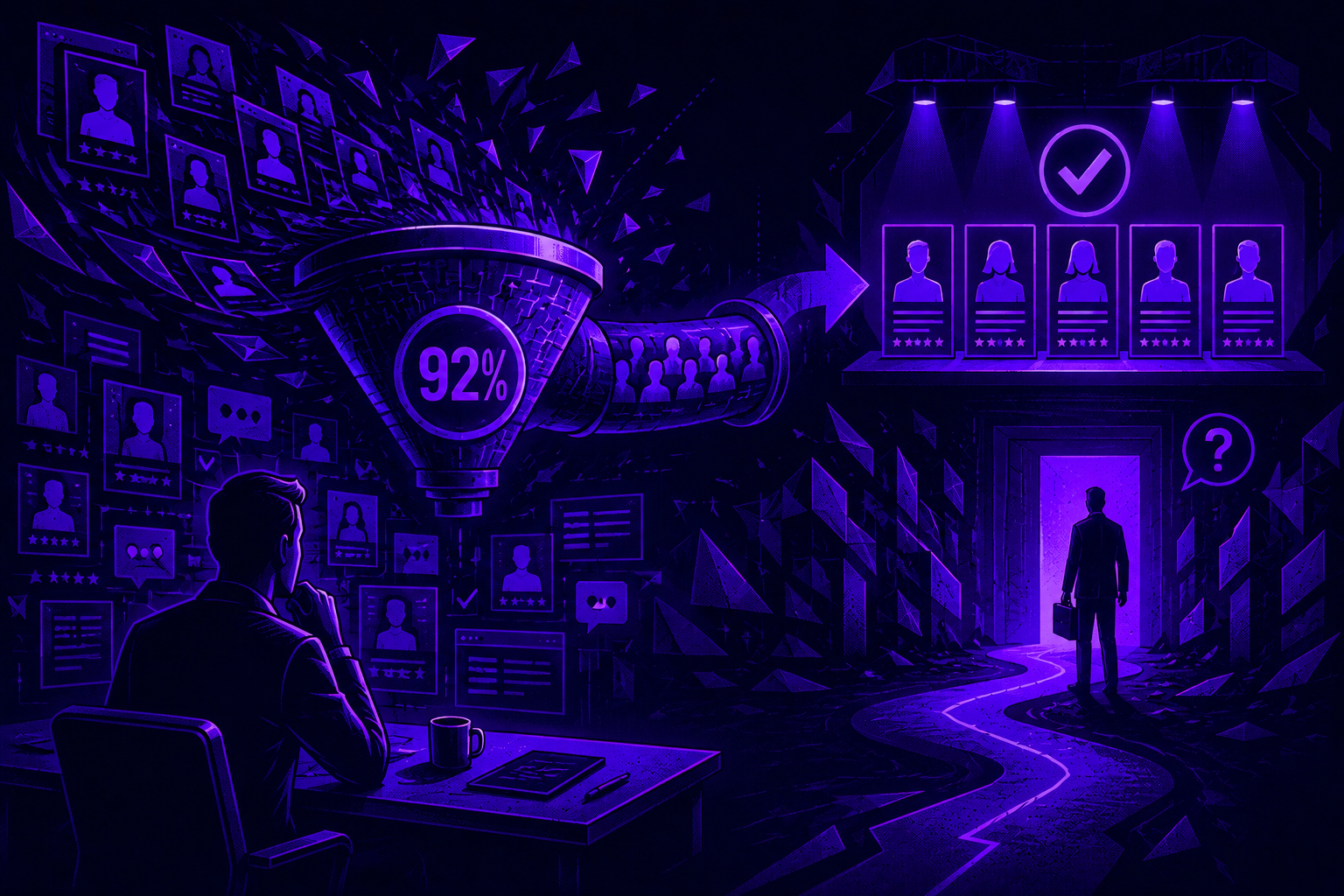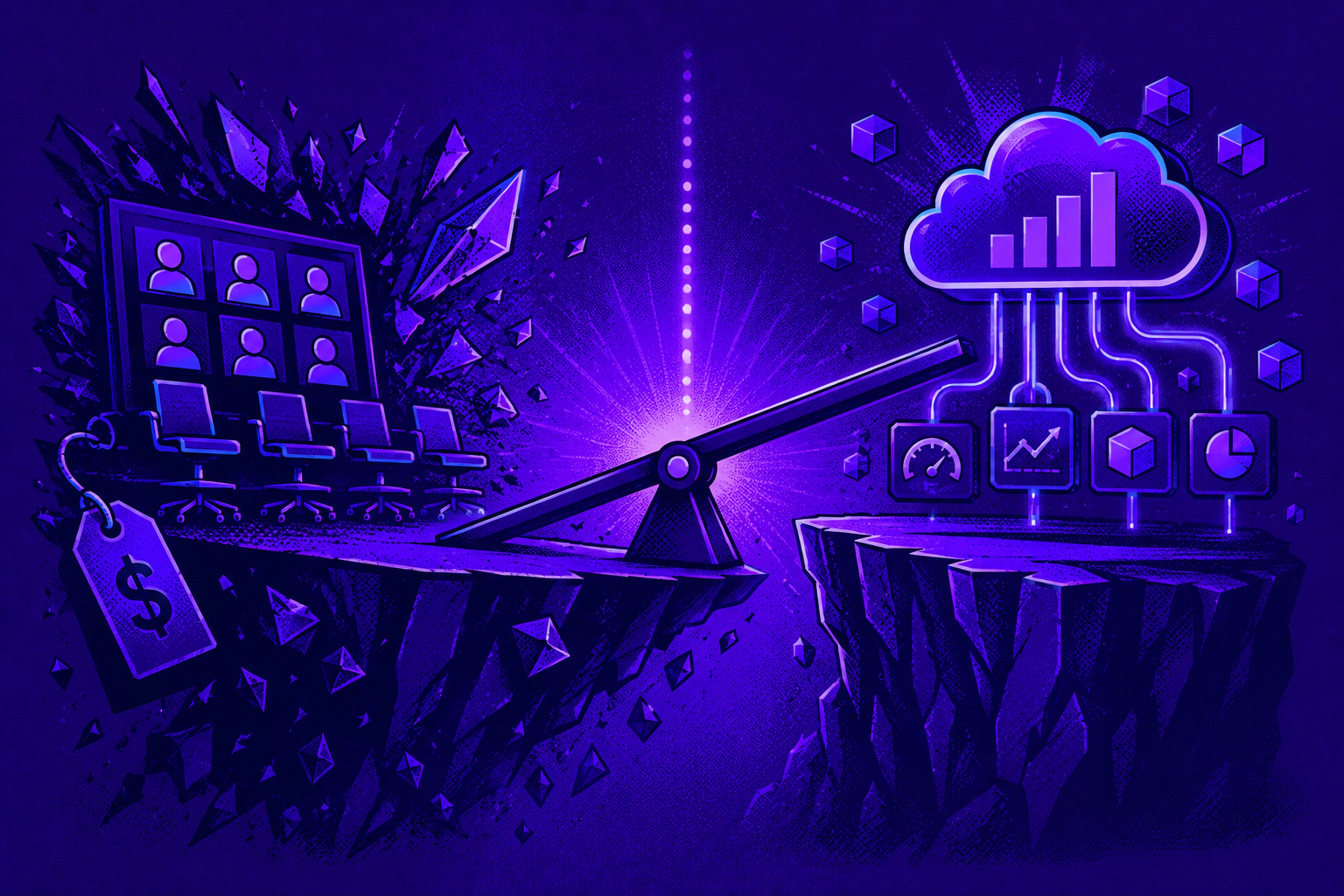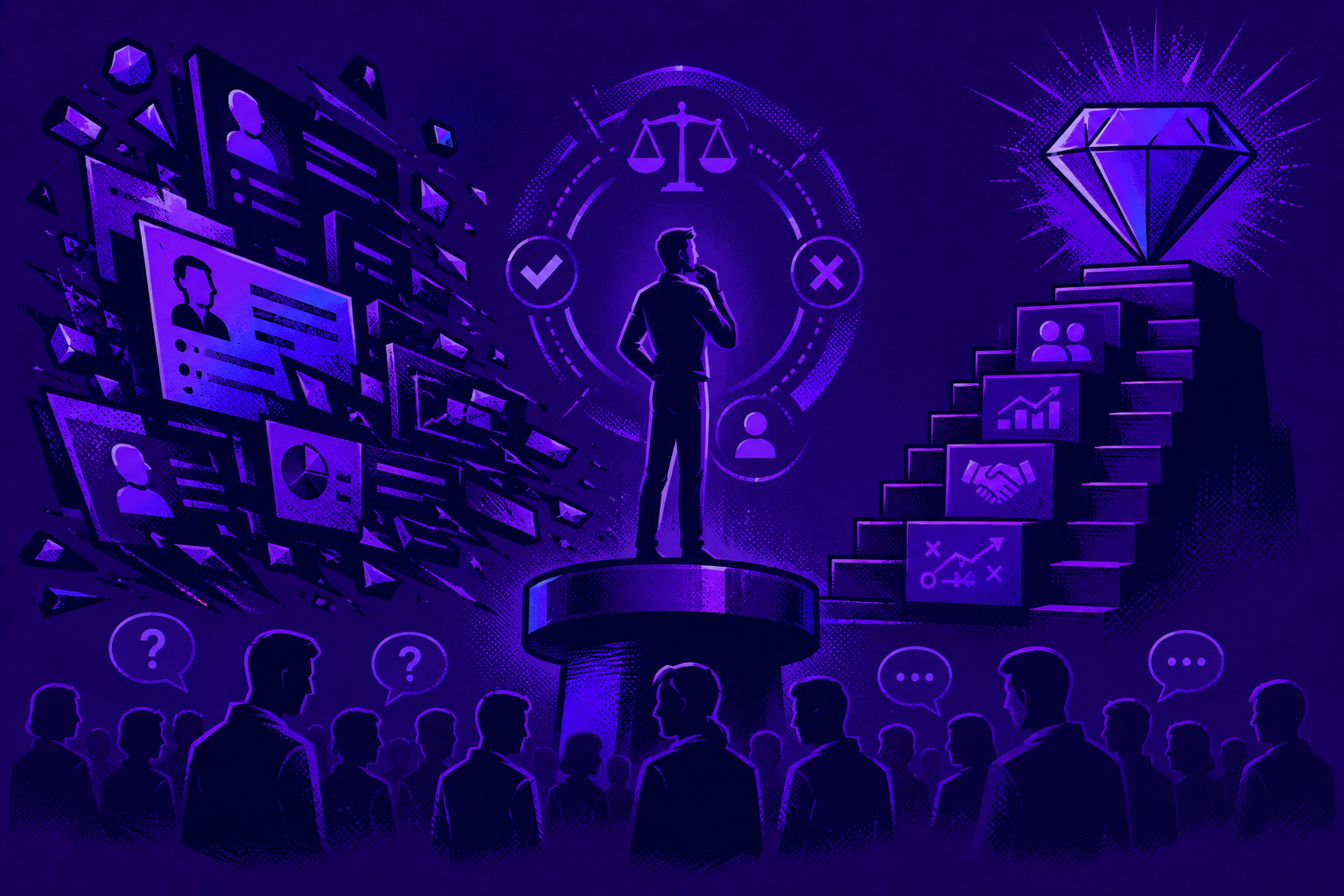
Your revenue team is equipped with the best tools money can buy. A state-of-the-art CRM, a sophisticated marketing automation platform, a dedicated sales engagement tool, a separate customer success platform, and a business intelligence suite for good measure. Individually, each platform promises efficiency and insight. Collectively, they form a cognitive obstacle course that is quietly eroding your team's mental capacity, slowing your revenue velocity, and fueling widespread burnout.
This is the paradox of the modern RevOps stack: built to empower, it often overwhelms. The issue isn't functionality, but fragmentation. Every tab switch, every login, every manual data sync between platforms is more than a minor annoyance, it's a cognitive tax that depletes the finite mental energy your team needs for high-value work: building relationships, crafting strategy, and closing deals.
Context-switching isn't multitasking. It's task-shifting, and the human brain pays a heavy toll for each shift. Neuroscience research confirms that switching between tasks requires the brain to:
This process consumes glucose and oxygen, burns through neurotransmitters, and generates attentional residue, a fragment of your focus left behind on the previous task. A study by the American Psychological Association estimates that even brief mental blocks created by shifting between tasks can cost as much as 40% of someone's productive time. For a sales rep making 80+ micro-switches a day between their CRM, email, dialer, and contract tool, the cognitive cost is staggering.
Source: American Psychological Association. Multitasking: Switching costs.https://www.apa.org/research/action/multitask
The damage extends far beyond lost minutes. It manifests in four critical areas:
1. The Performance Tax: Slowed Velocity & More Errors
Deals don't stall in meetings; they stall in the gaps between systems. A rep loses their train of thought while searching for a data point, leading to a less persuasive pitch. An account executive mis-keys a discount in a clunky CPQ interface, requiring Finance to intervene. The friction directly elongates sales cycles and increases mistakes.
2. The Creativity Tax: The Death of Deep Work
Strategic thinking, analyzing a complex account, designing a nurture campaign, diagnosing a churn risk, requires uninterrupted, focused "deep work." A fragmented stack, pinging with notifications and demanding constant tab-switching, makes this state of flow nearly impossible. You've built a team of strategists but forced them to work as administrative clerks.
Source: Newport, Cal. Deep Work: Rules for Focused Success in a Distracted World. (Grand Central Publishing, 2016).
3. The Morale Tax: From Empowerment to Exhaustion
Chronic cognitive overload is a primary driver of burnout. The constant, low-grade stress of managing a fragmented tool ecosystem leads to mental fatigue, frustration, and a sense of inefficacy. Talented people don't leave companies; they leave chaotic, draining work environments. Your tech stack is often the culprit.
4. The Insight Tax: Data Silos and Strategic Blindness
When data is trapped in separate platforms, true insight is fragmented. Marketing can't see the full sales conversation. Sales can't see post-sale health scores. Leadership gets conflicting reports. The context-switching isn't just between tabs, it's between conflicting versions of the truth, making coherent strategy difficult.
The goal is not more tools, but more flow. This requires designing your RevOps ecosystem to minimize cognitive load and maximize focused work. Follow this four-step detox.
Phase 1: Audit the True Cost
Map your team's core workflows (e.g., "Prospect to Close"). For each step, document every required tool switch, login, and manual data entry. Quantify the cognitive load: How many distinct systems are touched? How many times is the same data re-keyed? This map will reveal your highest-friction junctions.
Phase 2: Pursue Ruthless Integration
Adopt a "Single Pane of Glass" principle. Can critical actions be taken within one primary interface (typically the CRM)? Use native integrations and middleware (like Zapier or Workato) to create automatic, bidirectional data syncs. The rule: Data should enter once and flow everywhere.
Phase 3: Automate the Micro-Tasks
Identify and eliminate every "click-to-proceed" step. Automate:
Phase 4: Design for Focus
Create protocols that protect deep work.
Source: Microsoft Work Trends Index. The Economic Impact of Information Overload. https://www.microsoft.com/en-us/worklab/work-trend-index
Investing in a cognitively-efficient stack yields a clear ROI:
Your most valuable asset is not your software budget; it's your team's cognitive capital, their collective focus, creativity, and mental stamina. Every unnecessary context switch is a withdrawal from this finite account.
Stop asking if your team has the right tools. Start asking if their tools are giving them the right mind. Build a RevOps ecosystem that serves as a calm command centre, not a chaotic control panel. Reduce the cognitive cost, and you'll unlock your team's true capacity, and your revenue's true potential.
Is your RevOps stack a catalyst or a cognitive tax? Let's audit your team's workflow friction and build a plan for a focused, high-flow operation. Book a complimentary RevOps Efficiency Session.