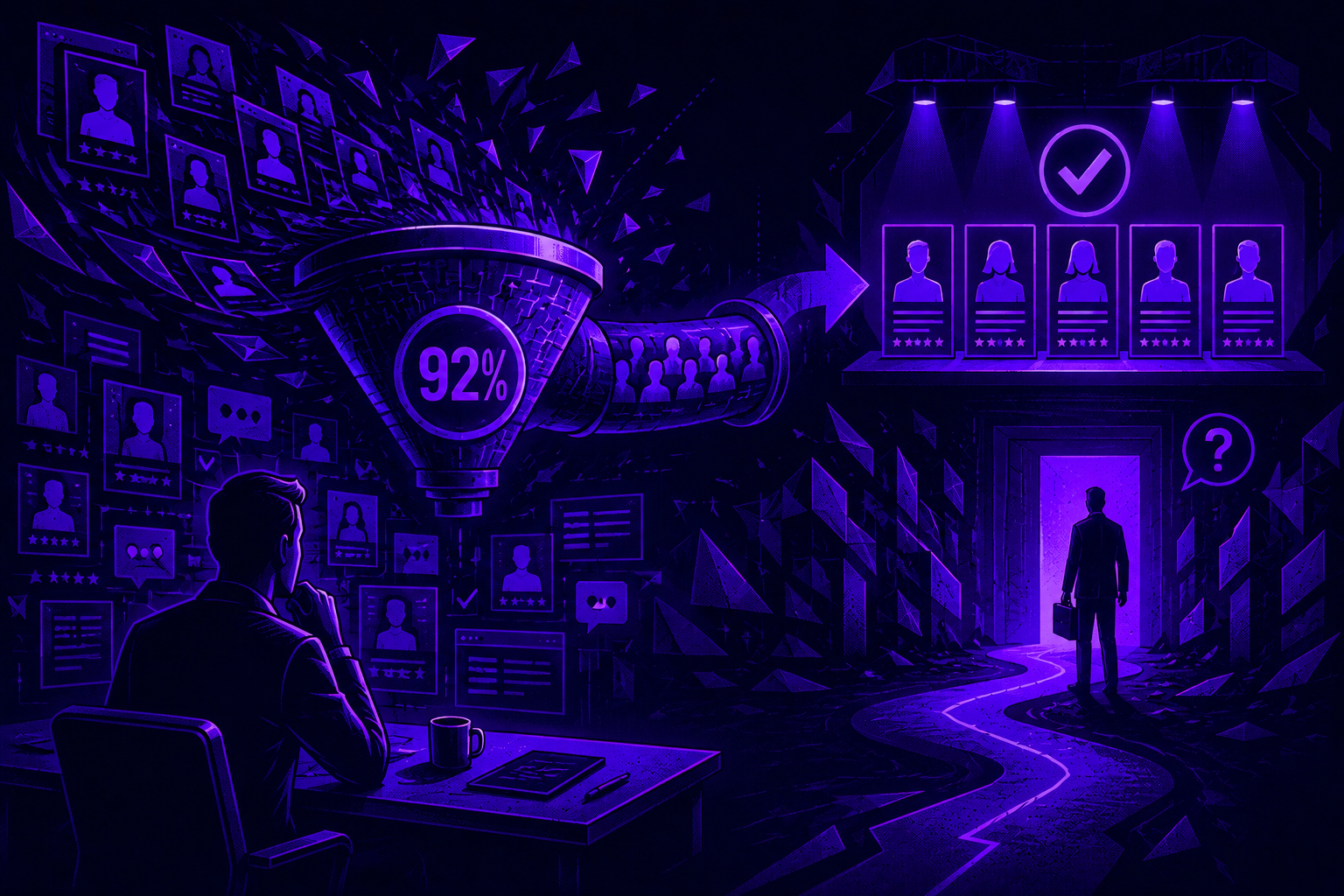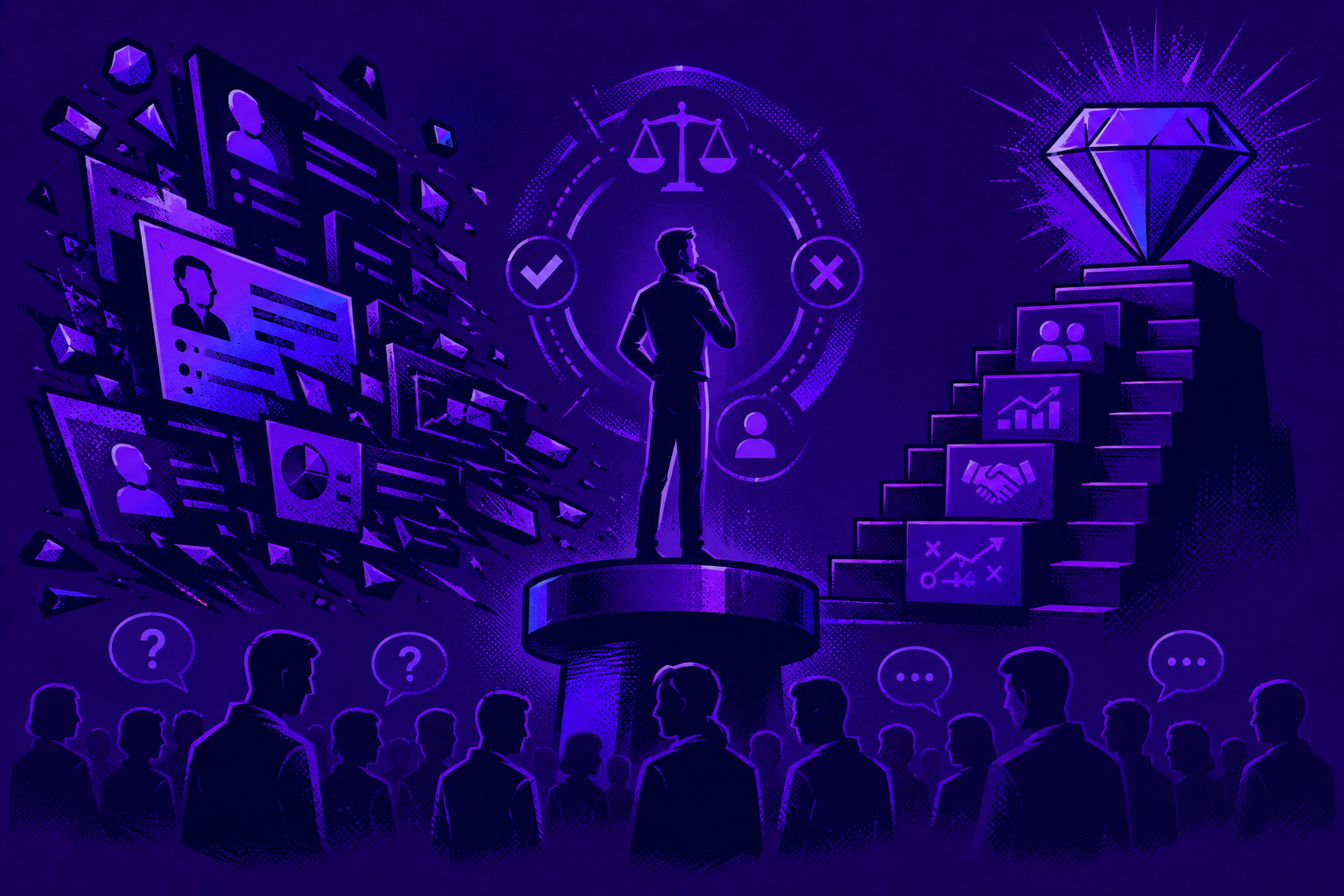
For a decade, "data-driven" was the ultimate corporate credential. It signalled sophistication, objectivity, and a ticket to the future. Boardrooms chanted the mantra. VCs demanded the proof. We built towering data stacks, hired armies of analysts, and wired our organizations to track everything that could be measured.
But something is quietly breaking. The same leaders who championed this revolution are now experiencing its side effects: a culture of risk-averse justification, innovation stifled by the demand for precedent, and a nagging sense that in becoming data-driven, we've lost something more vital, our capacity for bold judgment. The data is abundant, but true insight feels scarce. The future is modelled, but not created.
This isn't a failure of data. It's the inevitable outcome of a paradigm reaching its limit. Being "data-driven" has become table stakes, a basic cost of entry. The real competitive edge is now emerging from what comes next: the Hypothesis-Driven Organization.
The data-driven model was built on a powerful, linear logic: Collect → Analyze → Decide. Its success hinged on a stable world where the past was a reliable guide to the future. But we no longer live in that world.
Innovation Paralysis: In a truly novel scenario, launching a category-creating product, entering an unprecedented market, there is no historical data to "drive" the decision. The data-driven approach defaults to "no."
The Cult of the Retrospective: We become experts at explaining why something worked after the fact, using data to craft a perfect post-mortem narrative. This creates a culture that rewards hindsight and punishes foresight.
The Subordination of Intuition: Human intuition, the synthesis of experience, pattern recognition, and creative leap, is systematically devalued as "anecdotal" or "biased." We've optimized out our most sophisticated cognitive asset.
The research is catching up to this fatigue. A 2024 Gartner study on decision-making models found that while 78% of organizations claim to be data-driven, only 32% of their key strategic bets were primarily based on data analysis. The rest relied on a blend of experience, market sensing, and, crucially, testable hypotheses. The gap between aspiration and reality is where the old paradigm cracks.
The Hypothesis-Driven Organization flips the script. Its core logic is: Imagine → Experiment → Learn.
Data doesn't drive the car; it provides the navigation for a journey the human mind has charted. This model acknowledges that in conditions of uncertainty, a strong hypothesis is more valuable than a historical average.
Judgment is the Engine, Data is the Fuel. The starting point is a bold, human-generated claim about the world: "We believe that [X customer segment] would pay [Y price] for [Z new benefit] because of [this unmet need]." Data is then marshaled not to justify the idea, but to test it with ruthless efficiency.
Embrace the "Unknown Unknowns." The goal of an experiment is not to be right, but to be less wrong. The most valuable outcome is often a surprising insight, data that invalidates your hypothesis and points you in a more promising, unforeseen direction.
Speed of Learning Over Precision of Measurement. A Hypothesis-Driven team would rather run five cheap, 80%-confidence tests in a month than one gold-plated, 95%-confidence study in a quarter. The currency is validated learning, not statistical perfection.
This isn't a philosophical shift; it's a practical one. It requires new processes, rituals, and vocabulary.
1. Ritualize the "Belief Statement"
Replace the traditional business case with a standardized hypothesis canvas for any new initiative:
• We believe that… (State the core assumption about customer behaviour, market shift, or internal capability).
• To verify this, we will… (Design the minimal experiment: an A/B test, a concierge MVP, a targeted interview series).
• And measure… (Define the primary evidence, quantitative or qualitative, that will confirm or deny our belief.
• We will be right if… (Set clear, binary success criteria).
• We will have learned something valuable if… (Define what learning, even from a "failed" test, looks like).
2. Build a Portfolio of Bets, Not a Roadmap of Certainties
Strategic planning moves from a Gantt chart of deliverables to a portfolio management board of hypotheses, categorized by risk and potential reward:
• Core Bets: Iterative improvements on proven models (data-driven excels here).
• Adjacent Bets: Hypotheses that stretch existing capabilities into new customer or solution spaces.
• Transformational Bets: "Moon shots" with high risk of failure but potential to redefine the business. The organization allocates resources and, more importantly, expectations accordingly. A transformational bet is not a failure if it fails; it is a failure if it fails to generate decisive learning.
3. Promote "Strong Opinions, Weakly Held"
This famous phrase from futurist Paul Saffo becomes a cultural mandate. Leaders must articulate clear, confident hypotheses (strong opinions) but create an environment where disconfirming data is celebrated as progress, not punished as failure (weakly held). This requires separating the ego from the idea.
4. Re-tool Your "Insight Stack"
Your technology must support experimentation velocity.
• From: Monolithic BI platforms built for reporting the past.
• To: Agile experimentation platforms (like Optimizely, Statsig), rapid prototyping tools, and systems that track learning velocity—how many hypotheses are we testing per week, and what is our "learning yield"?
The Evidence: Why the Hypothesis Economy Wins
This shift from being purely data-driven to being hypothesis-driven is validated by recent research from leading institutions and observable in the operational models of today's most innovative companies.
• Scaling the Model at Tech Giants: Google's published research on its company-wide experimentation culture provides a powerful, real-world case study. In their paper "Trustworthy Online Experimentation: The Overlooked Challenge of Experimentation Platforms," Google engineers detail how they run over 100,000 controlled experiments annually. The key insight is that this system doesn't replace human judgment but structures it: product managers must formulate a clear hypothesis about user behaviour before any experiment is greenlit. This scale is impossible with a purely retrospective, data-driven model.
• The Enterprise AI Shift Demands New Approaches: According to Microsoft's 2024 Work Trend Index Annual Report, as companies race to implement AI, 68% of leaders worry their organization lacks a clear plan to measure AI's impact. The report emphasizes that "AI success requires moving from output metrics to outcome-oriented experiments," directly pointing to the need for hypothesis-driven frameworks to validate AI's business value.
• From Data Reports to Decision Intelligence: Gartner's 2024 strategic technology trends report highlights the shift from traditional business intelligence to "Decision Intelligence," a discipline that frames business decisions as models of outcomes, explicitly starting with hypotheses and assumptions before applying data.
• The Scale of Enterprise Experimentation: In a 2024 technical paper, LinkedIn's engineering team detailed their "Experimentation Platform," which runs thousands of concurrent A/B tests. The paper emphasizes that every experiment must begin with a clearly defined hypothesis and success metric, moving the culture from "reporting on what happened" to "testing what we believe will happen."
This revolution changes the fundamental job of leadership. The data-driven leader was a Steward of Truth, tasked with finding the "right" answer in the data. The hypothesis-driven leader is an Architect of Learning, tasked with designing a system that rapidly generates wisdom.
They ask different questions:
• Then: "What does the data say we should do?"
• Now: "What is the most important thing we don't know, and how can we find it out fastest?"
Being data-driven was about reducing uncertainty. Being hypothesis-driven is about thriving in it.
The post-data revolution is not an abandonment of data, but its elevation to a more mature role. Data is no longer the driver, but the essential co-pilot for human ingenuity. It is the compass for explorers, not the autopilot for commuters.
The organizations that will define the next decade will not be those with the most data, but those with the most compelling questions, the courage to test them, and the cultural resilience to be proven wrong, quickly, cheaply, and brilliantly. The future belongs not to the best analysts, but to the most insatiable learners.
It's time to stop letting the past drive. It's time to start building the future, one bold, testable belief at a time.
Your data stack should serve your strategy, not sabotage it. Full Stack RevOps provides a complimentary Data Efficiency Assessment to help your organization cut through complexity and regain strategic focus.